Cameras

  • 🇺🇸 EN
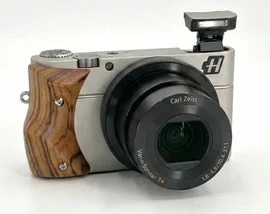
Hasselblad Stellar Special Edition
Hasselblad 1 inch

Hasselblad Stellar Special Edition

  • Year 2013 · 20.2Mp, 1 inch

The Hasselblad Stellar is a luxury compact camera that combines advanced Sony engineering with the iconic aesthetic refinement of the Swedish brand Hasselblad. Internally based on the acclaimed Sony RX100, its most notable technical feature is its 1-inch, 20.2-megapixel Exmor CMOS sensor, a size considerably larger than conventional compacts of its time, which guarantees excellent performance in low light conditions and superior dynamic range. It is complemented by a high-precision Carl Zeiss Vario-Sonnar T* optic with a maximum aperture of f/1.8 and an equivalent focal range of 28-100mm, ideal for capturing everything from wide landscapes to portraits with soft background blur. What truly sets the Stellar apart is not just its optical capabilities, but its handcrafted construction and ergonomic design. The body is made of aluminum with elegant finishes (such as champagne tone or special editions in black and white), but the protagonist element is its hand-carved handle. Users can find versions with exotic woods such as walnut, padouk, zebra or mahogany, as well as carbon fiber options. This approach transforms a technological tool into a collector's item, where each camera has a unique texture and improved ergonomics, moving away from industrial minimalism to offer a much more organic and sophisticated tactile and visual experience. As for its possible uses, the Hasselblad Stellar is the perfect companion for travel and lifestyle photography, where portability cannot compromise image quality. Its compact size allows it to be carried in a pocket, making it ideal for photographers who want to go unnoticed in street photography or social events without carrying heavy equipment. Plus, with full manual controls and the ability to shoot in RAW format, it's an excellent tool for the enthusiast photographer looking for an "everyday camera" with a professional soul. It is also positioned as an item of distinction for collectors who value Hasselblad's heritage and desire a device that functions as both a high-performance camera and a uniquely designed piece.
View details
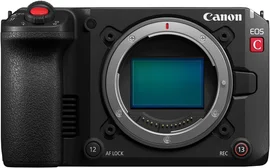
Canon EOS C50
Canon Full Frame

Canon EOS C50

  • Year 2025 · 32.5Mp, Full Frame

The Canon EOS C50 is presented as a hybrid tool that combines the ergonomics of a compact mirrorless camera with the power of a professional cinema line. Equipped with a 32.5 megapixel Full Frame sensor, it offers remarkable resolution for both still photography and high fidelity video. Its lightweight 737 gram design and weather-sealed body make it a versatile choice for those looking for a seamless transition into cinematography without sacrificing portability or compatibility with the wide range of RF mount lenses. Regarding its technical performance, it stands out for its internal recording capacity in 7K at 60fps and 4K up to 120fps, which allows captures with an extraordinary level of detail and high-quality slow motion options. The inclusion of a dual native ISO (800 and 6400) ensures clean results in low light conditions, a highly valued feature in reportage and night photography. Additionally, advanced features such as lens breathing correction and 4:2:2 10-bit color sampling provide creators with professional flexibility in post-production, allowing full control over the final image aesthetic. The potential uses of this camera are diverse, making it the ideal choice for documentary filmmakers, content creators for digital platforms and event videographers who require discreet but capable equipment. Its small size makes it perfect for use on gimbals or travel photography, while its professional connections, such as XLR inputs for high-quality audio and timecode terminal, allow it to be easily integrated into more complex production workflows where synchronization and technical performance are essential.

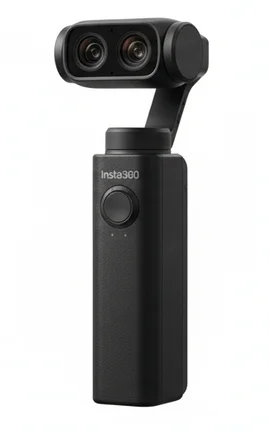
Insta360 Luna Pocket Camera
Insta360 133

Insta360 Luna Pocket Camera

  • Year 2026 · 133

The Insta360 Luna is emerging as a revolutionary tool for the photographer and videographer looking for versatility without carrying heavy equipment. Its greatest competitive advantage over the current DJI Osmo Pocket 3 is its innovative dual-lens system, which combines a wide-angle optic with a 3x optical zoom telephoto lens. While the Pocket 3 dominates with its 1-inch sensor for superior low-light performance, the Luna offers creative flexibility unprecedented in this format, allowing you to capture everything from immersive landscapes to portraits with true plane compression, something that was previously impossible in a pocket camera without resorting to digital zoom. For the photography enthusiast, this camera is not intended to replace your Mirrorless, but rather to complement it. Thanks to its modular design, the camera unit can be detached from the gimbal to be used independently, facilitating impossible angles or discreet setups in situations where a large camera would be invasive. In addition, its ability to record in 4K up to 240fps and 10-bit color support ensure that the material obtained has sufficient quality to be edited together with professional footage, maintaining chromatic consistency and exceptional fluidity in slow motion. In direct comparison with the Pocket 3, the Insta360 Luna is strongly committed to Artificial Intelligence. Thanks to its dual processor (Dual SoC/Pre-ISP), the Luna promises advanced image processing that optimizes night scenes and simulates a more natural background blur (bokeh), trying to close the gap with larger sensors. While the Pocket 3 stands out for its simplicity and single sensor quality, the Luna is positioned as a technological "Swiss army knife" with greater autonomy (up to 180 minutes) and a rotating screen that improves the framing experience in vlogging and street photography.

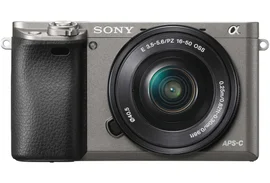
Sony Alpha a6000
Sony APS-C

Sony Alpha a6000

  • Year 2014 · 24Mp, APS-C

The Sony Alpha a6000 is powered by a 24.3MP Exmor APS-C CMOS sensor, which at the time redefined what a mirrorless camera of this size could achieve in terms of resolution and dynamic range. Thanks to the BIONZ The heart of its performance lies in an exceptionally fast hybrid autofocus system, which integrates 179 phase detection points that cover almost the entire frame. This architecture enables tracking of moving subjects with astonishing precision, complemented by a burst rate of up to 11 frames per second with continuous autofocus. It is a tool designed to capture the precise moment in genres such as street or action photography, where the reaction speed between the eye and the shutter is critical. In terms of ergonomics and versatility, its compact telemetry-style body is ideal for those who value portability and discretion without sacrificing technical power. It incorporates a high-resolution OLED Tru-Finder electronic viewfinder that offers 100% coverage, facilitating an accurate preview of exposure and depth of field in real time. Additionally, being part of Sony's well-established E-mount, it provides access to a vast ecosystem of high-end optics, allowing the user to evolve from ultra-bright prime lenses to specialized zooms according to their creative vision.

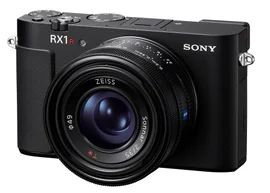
Sony Cyber-shot DSC-RX1R III
Sony Full Frame

Sony Cyber-shot DSC-RX1R III

  • Year 2025 · 61Mp, Full Frame

The Sony Cyber-shot DSC-RX1R III represents the culmination of optical engineering in a compact format, integrating a 61MP Exmor R CMOS sensor that redefines resolution in cameras in its class. This sensor, lacking a low-pass filter, works in conjunction with the BIONZ XR processor to deliver exceptional dynamic range and surgical color reproduction. For the discerning photographer, this translates into massive cropping capability and impeccable noise management, allowing you to capture textures and nuances that are usually reserved exclusively for much bulkier studio camera bodies. The soul of this camera lies in its ZEISS Sonnar T* 35mm f/2 fixed optic, designed specifically for this sensor in order to guarantee corner-to-corner sharpness without the aberrations typical of interchangeable lenses. The lens has a physical ring that allows you to switch to a macro mode with a minimum focusing distance of just 20 cm, providing creative versatility unusual in a fixed focal length. The combination of its circular aperture and the full-frame sensor produces a soft and organic bokeh that, added to the T* coating to minimize reflections, gives the images that three-dimensionality and microcontrast so valued in author photography. Beyond pure image quality, the RX1R III stands out for its sophisticated autofocus system powered by a dedicated artificial intelligence processing unit. This system allows real-time tracking of subjects with astonishing precision, recognizing humans, animals and various vehicles even in complex lighting conditions. All this potential is encapsulated in a magnesium alloy body that weighs less than 500 grams, positioning itself as the definitive tool for the street and travel photographer looking for absolute discretion without giving up the features of a high-end professional workstation.

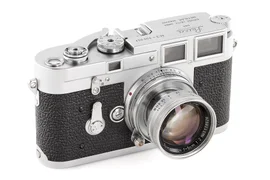
Leica M3
Leica 35mm Film (Full Frame)

Leica M3

  • Year 1954 · 35mm Film (Full Frame)

The Leica M3 is one of the most influential 35mm cameras ever made and a major turning point in Leica's history. Introduced in 1954, it launched the M system and presented a refined rangefinder concept that combined speed, precision, and a cleaner shooting workflow. Its importance is not only historical but practical: the M3 brought the Leica M mount, a highly regarded optical rangefinder experience, and the kind of mechanical build quality that made it a long-term working tool rather than a short-lived product. For many photographers, it represented the ideal balance between compactness and serious photographic control. In use, the M3 is a fully manual camera that encourages careful composition and timing. It does not offer the automation and convenience that later SLRs and modern digital bodies provide, but that limitation is exactly what makes it compelling for photographers who value tactile control and a direct connection to the process. The M3 was a clear success and became a benchmark for rangefinder design. Its reputation has lasted for decades because it was not just a beautiful object: it was a camera that delivered dependable performance, shaped professional and enthusiast workflows, and set the tone for the Leica M lineage that followed.

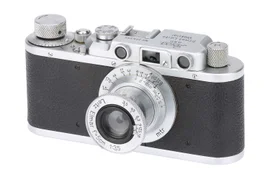
Leica II
Leica 35mm Film (Full Frame)

Leica II

  • Year 1932 · 35mm Film (Full Frame)

The Leica II is one of the cameras that helped define what a modern portable 35mm system could be. Introduced in 1932, it took the compact Leica concept a step further by integrating a coupled rangefinder, making focusing faster and more precise for real-world shooting. Technically, it is a fully manual 35mm film rangefinder built around interchangeable LTM/M39 lenses. That combination gave photographers a small body with system flexibility, something especially attractive at a time when many cameras were still larger, slower, or less practical for everyday reportage and travel. Using a Leica II today feels mechanical and deliberate: manual focus, manual exposure decisions, and a workflow that rewards patience. It lacks later conveniences such as built-in metering, but that simplicity is also part of its appeal for photographers interested in the origins of fast 35mm shooting. Historically, the Leica II was a success because it strengthened Leica's reputation for precision, portability, and system thinking. More than just an early model, it became an important step in the evolution of rangefinder photography and in the broader rise of candid 35mm image-making.

Nikon D610
Nikon Full Frame

Nikon D610

  • Year 2013 · 24Mp, Full Frame

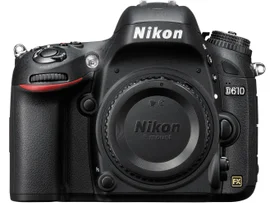
The Nikon D610 was released just a year after its predecessor, maintaining the excellent 24.3MP Full Frame sensor that stands out for its 14.4 EV dynamic range and great high-ISO performance. While it retains the robust, weather-sealed magnesium alloy body, the most critical upgrade was a redesigned shutter mechanism, which eliminated the sensor oil spot issues that plagued the D600. Additionally, it slightly increased the burst rate to 6 fps and introduced a new "Quiet Continuous" (Qc) shutter mode at 3 fps, ideal for situations where discretion is key. On the technical side, it continues to offer a 39-point AF system (9 cross-type), a 100% coverage optical viewfinder, and dual SD card slots, preserving Nikon's characteristic professional ergonomics. For video, it keeps the ability to record in Full HD at 30p with uncompressed HDMI output and dedicated ports for both a microphone and headphones. It is, in essence, a refined and more reliable version of the D600, solidifying its place as a balanced and solid option for photographers looking to step into full-frame territory without the complexity or cost of higher-tier series.

Recommended Reading