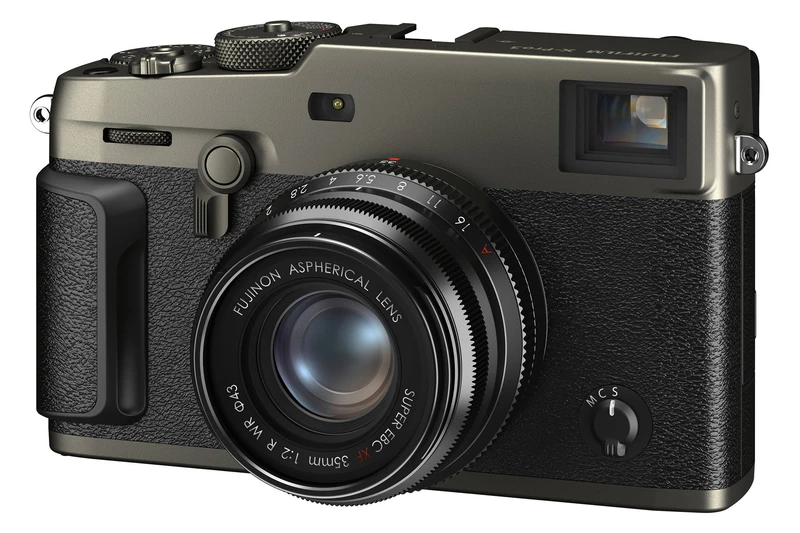
Fujifilm X-Pro3
The Fujifilm X-Pro3 stands out for its disruptive design and premium titanium construction with DuraTect coating, making it extremely resistant and elegant. Its most distinctive feature is the "hidden" LCD screen, which folds inward to show only a small panel with basic settings, encouraging a purer, analogue shooting experience by minimizing the temptation to review each photo immediately. Along with its advanced hybrid viewfinder, which allows you to instantly switch between clear optical viewing and digital electronic preview, this camera is designed for photographers looking to reconnect with the moment and prioritize composition through the viewfinder. In the technical section, the camera integrates the 26.1 megapixel X-Trans CMOS 4 sensor and the X-Processor 4 processor, guaranteeing exceptional image quality, fast autofocus and excellent performance in low light conditions. A key point for enthusiasts is its color science, which includes exclusive film simulations such as "Classic Neg", emulating the look of traditional film film directly into JPEG files. Although it lacks internal image stabilization (IBIS), its body is weather sealed, making it a robust tool capable of operating in demanding environments. Due to its rangefinder aesthetic and discreet handling, the X-Pro3 is the ideal tool for street photography, photojournalism and travel. Its compact size and silent operation allow the photographer to go unnoticed, capturing spontaneous moments without disturbing the scene. It is a camera designed for the purist who values tactile ergonomics and seeks a different sensory experience, where the manual configuration process and direct observation are as important as the final image result.