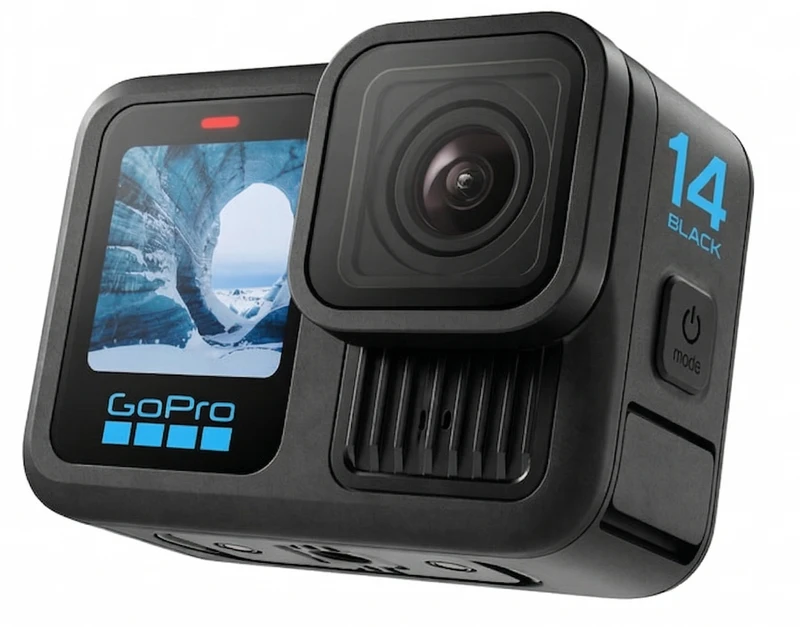
GoPro Hero 14
The GoPro Hero 14 Black is emerging as the paradigm shift that photographers were waiting for, finally breaking with the limitations of small sensors. The integration of a 1-inch sensor and the new GP3 processor with 5nm architecture mark a before and after in pure image quality. By having a dedicated Neural Processing Unit (NPU) , the camera not only processes pixels, but interprets the scene to optimize dynamic range and performance at high ISOs, reducing that digital noise so characteristic of action cameras in complex lighting conditions.From an aesthetic perspective, this generation abandons aggressive, overly sharp processing to embrace a cinema-gradelook. Thanks to the larger size of the sensor, it is now possible to obtain a more natural and organicdepth of field, with smoother color transitions that facilitate post-production work. The specifications of 8K a 30fps and 4K a 240fps are not just numbers; They represent the ability to extract high-resolution frames or perform extreme slow motion without sacrificing color fidelity, something vital for those seeking visual consistency when mixing action clips with full-sensor cameras.In terms of a its versatility, the Hero 14 becomes an ultimate hybrid tool. For a photographer, it is the ideal camera for high-fidelity B-roll that integrates perfectly into a professional workflow, allowing impossible angles to be captured with a quality that withstands grading in advanced software. Its uses range from discreet street photography with improved RAW capabilities, to the creation of content for technology or photography channels where it is required to show detailed processes (macro) with a real background blur, all while maintaining the robustness necessary for demanding climates and long sessions thanks to its new metallic thermal management.