Hasselblad Stellar Special Edition
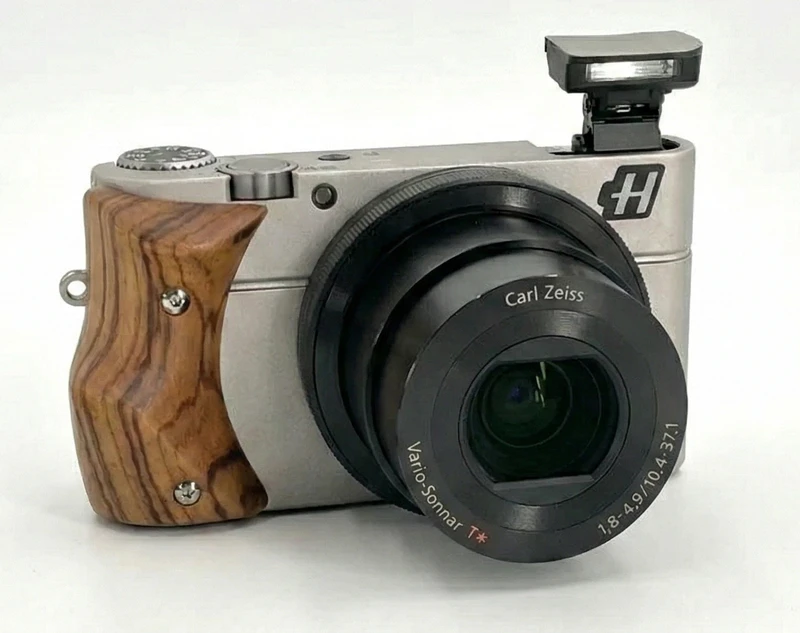
The Hasselblad Stellar is a luxury compact camera that combines advanced Sony engineering with the iconic aesthetic refinement of the Swedish brand Hasselblad. Internally based on the acclaimed Sony RX100, its most notable technical feature is its 1-inch, 20.2-megapixel Exmor CMOS sensor, a size considerably larger than conventional compacts of its time, which guarantees excellent performance in low light conditions and superior dynamic range. It is complemented by a high-precision Carl Zeiss Vario-Sonnar T* optic with a maximum aperture of f/1.8 and an equivalent focal range of 28-100mm, ideal for capturing everything from wide landscapes to portraits with soft background blur. What truly sets the Stellar apart is not just its optical capabilities, but its handcrafted construction and ergonomic design. The body is made of aluminum with elegant finishes (such as champagne tone or special editions in black and white), but the protagonist element is its hand-carved handle. Users can find versions with exotic woods such as walnut, padouk, zebra or mahogany, as well as carbon fiber options. This approach transforms a technological tool into a collector's item, where each camera has a unique texture and improved ergonomics, moving away from industrial minimalism to offer a much more organic and sophisticated tactile and visual experience. As for its possible uses, the Hasselblad Stellar is the perfect companion for travel and lifestyle photography, where portability cannot compromise image quality. Its compact size allows it to be carried in a pocket, making it ideal for photographers who want to go unnoticed in street photography or social events without carrying heavy equipment. Plus, with full manual controls and the ability to shoot in RAW format, it's an excellent tool for the enthusiast photographer looking for an "everyday camera" with a professional soul. It is also positioned as an item of distinction for collectors who value Hasselblad's heritage and desire a device that functions as both a high-performance camera and a uniquely designed piece.