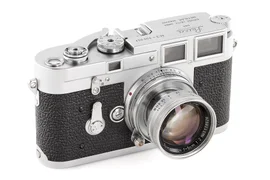
Leica M3
The Leica M3 is one of the most influential 35mm cameras ever made and a major turning point in Leica's history. Introduced in 1954, it launched the M system and presented a refined rangefinder concept that combined speed, precision, and a cleaner shooting workflow. Its importance is not only historical but practical: the M3 brought the Leica M mount, a highly regarded optical rangefinder experience, and the kind of mechanical build quality that made it a long-term working tool rather than a short-lived product. For many photographers, it represented the ideal balance between compactness and serious photographic control. In use, the M3 is a fully manual camera that encourages careful composition and timing. It does not offer the automation and convenience that later SLRs and modern digital bodies provide, but that limitation is exactly what makes it compelling for photographers who value tactile control and a direct connection to the process. The M3 was a clear success and became a benchmark for rangefinder design. Its reputation has lasted for decades because it was not just a beautiful object: it was a camera that delivered dependable performance, shaped professional and enthusiast workflows, and set the tone for the Leica M lineage that followed.