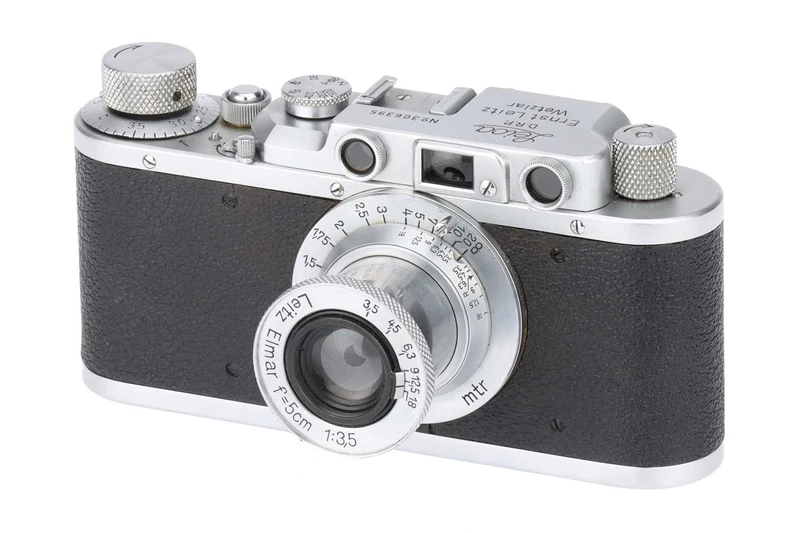
Leica II
Useful links
Some links may be affiliate links (sponsored).
The Leica II is one of the cameras that helped define what a modern portable 35mm system could be. Introduced in 1932, it took the compact Leica concept a step further by integrating a coupled rangefinder, making focusing faster and more precise for real-world shooting. Technically, it is a fully manual 35mm film rangefinder built around interchangeable LTM/M39 lenses. That combination gave photographers a small body with system flexibility, something especially attractive at a time when many cameras were still larger, slower, or less practical for everyday reportage and travel. Using a Leica II today feels mechanical and deliberate: manual focus, manual exposure decisions, and a workflow that rewards patience. It lacks later conveniences such as built-in metering, but that simplicity is also part of its appeal for photographers interested in the origins of fast 35mm shooting. Historically, the Leica II was a success because it strengthened Leica's reputation for precision, portability, and system thinking. More than just an early model, it became an important step in the evolution of rangefinder photography and in the broader rise of candid 35mm image-making.
- 35mm film rangefinder camera
- First Leica with a built-in coupled rangefinder
- Manual focus and manual exposure
- Interchangeable LTM/M39 lenses
- Introduced in 1932
Specifications
- Brand
- Leica
- Line or model
- II
- Sensor type
- Photographic film Sensor technology (for example, CMOS, CCD).
- Body type
- Rangefinder
- Body classification
- Rangefinder
- Viewfinder
- Optical coupled rangefinder viewfinder Viewfinder type (optical or electronic) for composition.
- Lens Mount
- Leica Thread Mount (LTM/M39) Lens mount type supported by the camera. If L-Mount Alliance appears, it means the camera uses Leica L mount shared across alliance brands.