Nikon Cameras

Nikon has established itself in the digital era as a benchmark for innovation thanks to its Z System, its line of full-frame APS-C format mirrorless cameras. The most distinctive feature of this platform is the Z mount, which has the largest diameter on the market, allowing much more light to enter...

Brand Info

Company Name
Nikon
Official website
Full description

Nikon has established itself in the digital era as a benchmark for innovation thanks to its Z System, its line of full-frame APS-C format mirrorless cameras. The most distinctive feature of this platform is the Z mount, which has the largest diameter on the market, allowing much more light to enter the sensor. This has facilitated the creation of NIKKOR Z lenses with extremely bright apertures and sharpness that surpass previous standards, offering photographers exceptional low-light performance and artistic bokeh control.

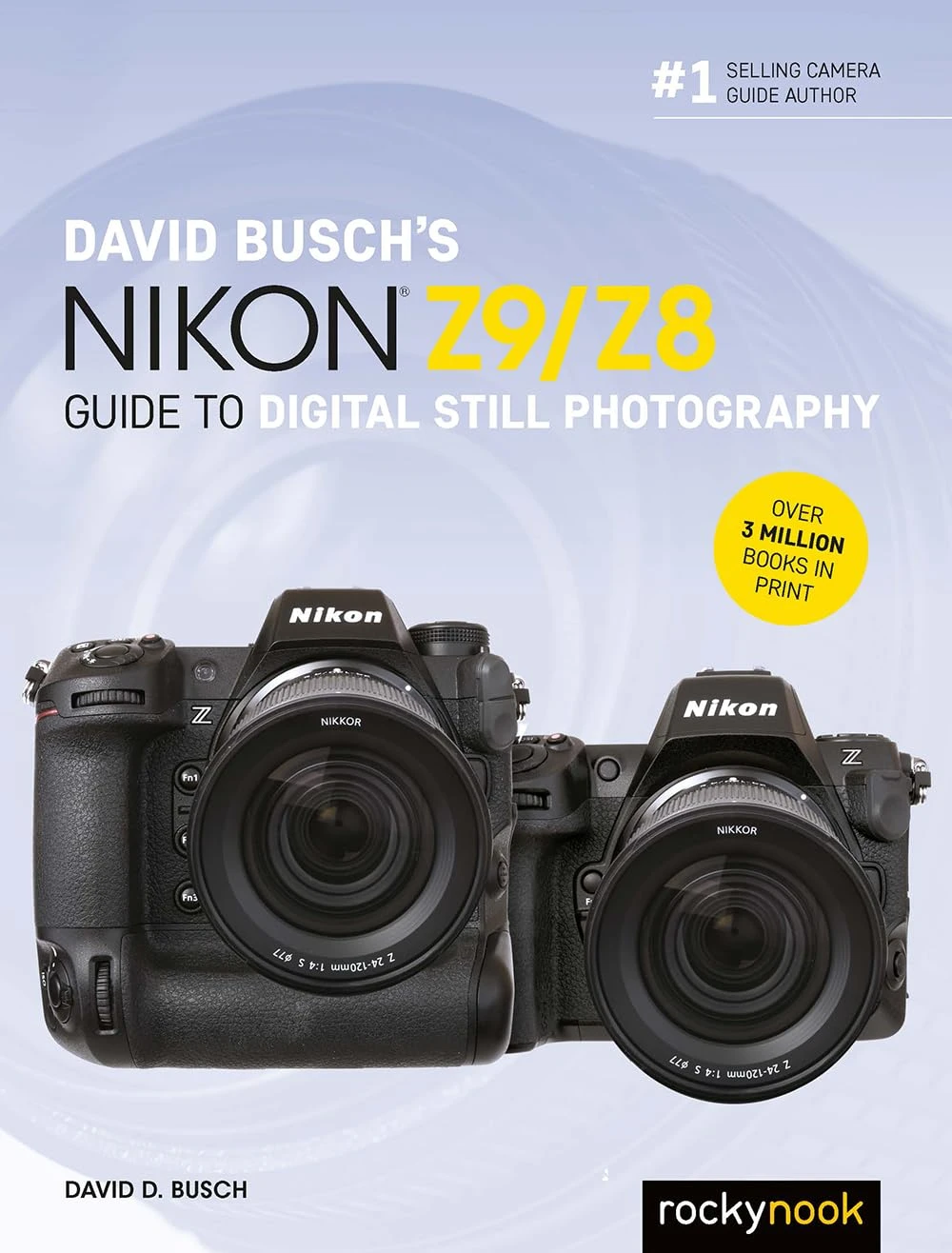
For today's photographer, Nikon offers AI-tracking autofocus (AF) technology, capable of detecting and locking on the gaze of humans, animals, birds, and even vehicles with astonishing accuracy. Iconic models such as the Nikon Z 9 or Z 8 stand out for having eliminated the mechanical shutter in favor of a fully electronic design, allowing burst shooting at ultra-high speeds and video recording in cinema-grade 8K resolution. In addition, the brand maintains its excellent ergonomics and its renowned "color science", which produces natural skin tones and RAW files with a very flexible dynamic range for professional editing.

Finally, Nikon has demonstrated a strong commitment to versatility and the photography community by integrating technologies inherited from its recent acquisition of RED Digital Cinema, dramatically improving its video capabilities. Likewise, the brand continues to support those who prefer classic style through cameras with vintage design but modern engines, such as the Nikon Z f, and maintains excellent compatibility with older lenses through adapters. In short, Nikon today offers an ecosystem that balances professional ruggedness, cutting-edge optics, and processing technology that simplifies technical challenges so the user can focus purely on creativity.

Nikon D40
Nikon APS-C

Nikon D40

  • Year 2006 · MP missing, APS-C

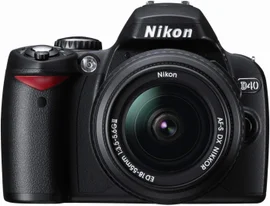
The Nikon D40 is today considered a "cult classic" in the world of digital photography, ideal for those seeking a pure, tactile introduction to imaging without the distractions of modern technology. Its most distinctive feature is its 6.1 megapixel CCD sensor; Unlike today's CMOS sensors, CCDs of this era are prized for their organic color reproduction and a look that many compare to photographic film. Despite its age, it offers exceptional ergonomics and lightness that makes it extremely comfortable for long days of shooting, maintaining the robustness that characterizes Nikon. In terms of performance, its most notable technical limitation for the enthusiast photographer is the absence of an internal focusing motor in the body, forcing the use of AF-S or AF-P series lenses if autofocus is to be maintained. However, it makes up for this with a surprising technical feature: a hybrid shutter that allows flash sync up to 1/500s. This feature is a gem for those experimenting with studio or strobist lighting, as it allows you to freeze motion and control ambient light with an efficiency that even much more expensive professional cameras envy. In terms of its practical uses, the D40 is an exceptional tool for street and travel photography due to its discreet profile and lightweight files that don't clutter storage. It is also the perfect platform for photography students who want to master the exposure triangle manually without relying on touch screens or complex menus. Combined with a prime lens like the 35mm f/1.8G, it becomes a very capable portrait camera, ideal for capturing natural skin tones and learning to "see" light without the crutch of excessive digital processing.
View details
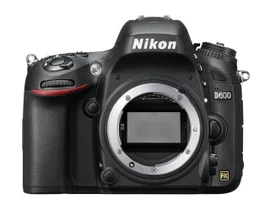
Nikon D610
Nikon Full Frame

Nikon D610

  • Year 2013 · 24Mp, Full Frame

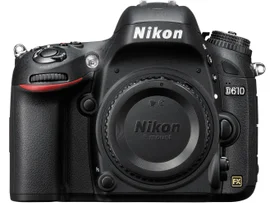
The Nikon D610 was released just a year after its predecessor, maintaining the excellent 24.3MP Full Frame sensor that stands out for its 14.4 EV dynamic range and great high-ISO performance. While it retains the robust, weather-sealed magnesium alloy body, the most critical upgrade was a redesigned shutter mechanism, which eliminated the sensor oil spot issues that plagued the D600. Additionally, it slightly increased the burst rate to 6 fps and introduced a new "Quiet Continuous" (Qc) shutter mode at 3 fps, ideal for situations where discretion is key. On the technical side, it continues to offer a 39-point AF system (9 cross-type), a 100% coverage optical viewfinder, and dual SD card slots, preserving Nikon's characteristic professional ergonomics. For video, it keeps the ability to record in Full HD at 30p with uncompressed HDMI output and dedicated ports for both a microphone and headphones. It is, in essence, a refined and more reliable version of the D600, solidifying its place as a balanced and solid option for photographers looking to step into full-frame territory without the complexity or cost of higher-tier series.

Nikon D600
Nikon Full Frame

Nikon D600

  • Year 2012 · 24Mp, Full Frame

The Nikon D600 was a landmark release in 2012, designed as the first truly accessible "prosumer" full-frame DSLR. It successfully bridged the gap between the DX (APS-C) enthusiast bodies and the professional D800 series, offering a high-performance 24.3MP CMOS sensor in a significantly more compact and lightweight chassis. Its standout feature remains its exceptional image quality, boasting a 14.2 EV dynamic range and superb color depth, making it a favorite for landscape and portrait photographers who demand clean, flexible RAW files even by modern standards. Technically, the camera is built around a robust 39-point AF system (9 cross-type) and an EXPEED 3 processor, delivering a respectable burst rate of 5.5 fps. For the seasoned shooter, the inclusion of a 100% coverage pentaprism viewfinder and weather-sealed magnesium alloy construction ensures a professional feel and reliability in the field. It also features dual SD card slots for instant backup and a dedicated "Quiet" shutter mode, which was a significant draw for wedding and event photographers at the time. On the video front, the D600 was ahead of its class, providing uncompressed HDMI output and dedicated jacks for both an external microphone and headphones for real-time monitoring. While its maximum shutter speed of 1/4000s slightly limits it compared to the 1/8000s found on higher-tier bodies, its balance of ergonomics and sensor performance remains impressive. Though it was eventually succeeded by the D610 to address early sensor dust issues, a clean D600 remains a highly capable tool for any photographer prioritizing full-frame depth and classic Nikon handling.

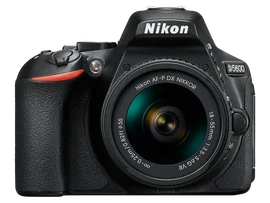
Nikon D5600
Nikon APS-C

Nikon D5600

  • Year 2016 · 24.2Mp, APS-C

The Nikon D5600 is one of the most balanced DSLR cameras for those looking to take a leap in quality without carrying heavy equipment. Its star feature is the 24.2MP APS-C sensor without a low-pass filter, which translates into images with impressive sharpness and detail for its category. Additionally, it features a fully articulated 3.2-inch touchscreen display, an essential tool for creative photographers who need to shoot from difficult angles or vlog comfortably. Another strong point of this model is its connectivity and ergonomics. Thanks to the SnapBridge system, the camera maintains a constant connection with your smartphone via Bluetooth, allowing you to automatically transfer photos while you shoot. Although it is a mid-range camera, its 39-point focusing system and excellent autonomy (capable of taking up to 820 photos per charge) make it a reliable and versatile companion, ideal for both portraits with blurred backgrounds and travel and landscape photography.

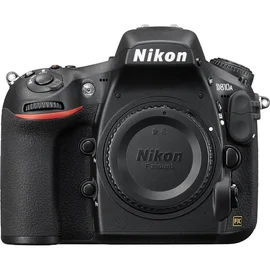
Nikon D810A
Nikon Full Frame

Nikon D810A

  • Year 2015 · 36Mp, Full Frame

The Nikon D810A is a specialized variant whose main feature is a modified IR cut filter, designed specifically for deep sky astrophotography. This modification makes it four times more sensitive to the H-alpha spectral line (wavelength of 656 nm), allowing it to capture emission nebulae that standard cameras usually ignore with a natural reddish intensity and color. Because of this filter, it is an optimized tool to capture the finer details of the universe that are invisible to the human eye. Beyond the sensor, the D810A introduces exclusive software features to make night work easier, such as Manual Long Exposure Mode (M)*, which allows shutter times of up to 900 seconds without the need for an external remote control. It also includes an optimized on-screen preview for focusing on stars and superior internal noise reduction for extremely long exposures. Although it maintains the 36.3 MP resolution of its standard sister, its technical configuration defines it as a niche camera, essential for those seeking maximum fidelity in astronomical photography.

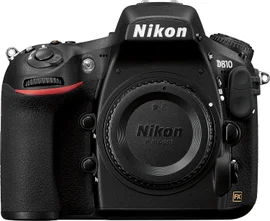
Nikon D810
Nikon Full Frame

Nikon D810

  • Year 2014 · 36Mp, Full Frame

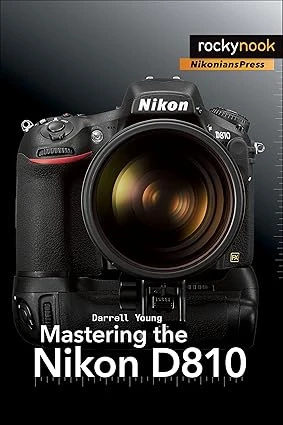
The Nikon D810 established itself as one of the most versatile DSLR cameras for professionals thanks to its 36.3MP full-frame sensor that dispenses with the low-pass filter (OLPF). This feature, combined with the EXPEED 4 processor, allows for extreme sharpness and exceptional dynamic range, ideal for landscape and studio photography. In addition, it stands out for offering a native ISO of 64, the lowest at the time for a DSLR, which guarantees incredibly clean images with rich tonal transitions even in bright light conditions. Its robustness and performance are complemented by a redesigned shutter mechanism that minimizes internal vibrations, along with a high-precision 51-point autofocus system. Unlike its predecessors, the D810 is significantly improved in video, enabling Full HD recording at 60p with clean HDMI output, and offering class-leading battery life (up to 1,200 shots), making it a reliable all-round work tool.

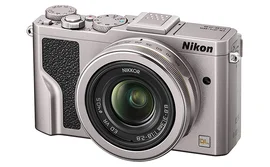
Nikon DL (Cancelled)
Nikon 1 inch

Nikon DL (Cancelled)

  • Year 2016 · 20.8Mp, 1 inch

The Nikon DL series was an ambitious bid to dominate the premium compact market through three variants equipped with 1-inch sensors: the DL18-50, featuring a class-leading f/1.8 ultra-wide-angle lens; the DL24-85, designed for everyday use with an impressive 1:1 macro function; and the DL24-500, a "superzoom" version for capturing long-distance action. All models shared high-end technologies such as the EXPEED 6A processor, a blazing-fast hybrid autofocus system, 20 fps continuous shooting, and 4K UHD video recording, all within a user interface familiar to DSLR owners. However, the project was permanently canceled in February 2017, one year after its announcement, without ever hitting the shelves. The decision was driven by critical development delays caused by issues with the image processing chip and an unexpected increase in production costs. Faced with a compact camera market that was rapidly shrinking due to the evolution of smartphones, Nikon determined that the DL series would no longer be profitable, making it one of the most famous cases of "vaporware" in photography history. ------- Official Announcement: Cancellation of the Launch of the Premium Compact Camera DL Series / February 13, 2017 TOKYO - Nikon Corporation announced today that sales of the highly anticipated DL series of premium compact cameras—the DL18-50mm f/1.8-2.8, DL24-85mm f/1.8-2.8, and DL24-500mm f/2.8-5.6—will be canceled. The DL series was originally planned for release in June 2016. However, after issues were identified with the image processing integrated circuit, the launch of the three cameras was indefinitely postponed. Since then, everyone involved has worked diligently to develop products that will satisfy our customers. However, the decision has been made to cancel sales of the DL series due to concerns about its profitability, considering the increased development costs and the anticipated decrease in sales due to the slowing market. We sincerely apologize to everyone affected by this decision, especially customers who have waited so long for the cameras to be released, retailers, and others whose businesses will be impacted, for any inconvenience this decision may cause.

Nikon 1 AW1
Nikon 1 inch

Nikon 1 AW1

  • Year 2013 · 14Mp, 1 inch

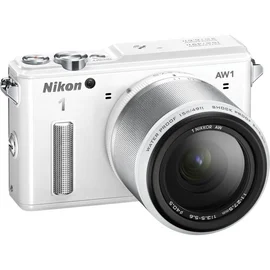
The Nikon 1 AW1 stands out for being the only interchangeable lens camera in the world designed to be completely waterproof (up to 15 meters) and drop resistant without the need for an external case. Equipped with a 1-inch 14.2MP sensor, it offers an extremely fast hybrid autofocus system and burst shooting up to 60 fps, making it ideal for action and water sports. Its most important features include its robust stainless steel construction, hermetic sealing reinforced with O-rings, integrated GPS with depth gauge and compass, and the ability to interchange specific AW series lenses that maintain the system's watertightness in extreme cold and wet conditions.

Recommended Reading