Panasonic Cameras with Processor Venus Engine

The Venus Engine acts as the central nervous system of the Panasonic Lumix cameras, being directly responsible for translating the light captured by the sensor into a polished final image. For the photographer, its importance lies in the science of color and texture management; This processor uses a...

Brand Info

Company Name
Panasonic
Official website
Not available
Full description

The Venus Engine acts as the central nervous system of the Panasonic Lumix cameras, being directly responsible for translating the light captured by the sensor into a polished final image. For the photographer, its importance lies in the science of color and texture management; This processor uses advanced algorithms to separate visual noise from real detail, allowing you to obtain clean images even in low light conditions (high ISOs) without skin or landscapes losing their natural appearance.

Beyond aesthetic quality, this motor is the driver of the camera's performance and speed. Thanks to its multi-core architecture, it handles critical tasks such as artificial intelligence autofocus – capable of recognizing and tracking eyes, faces and animals in real time – and allows you to shoot high-speed bursts without the buffer collapsing. It is, essentially, what makes a camera feel agile and responsive, allowing you to capture the "decisive moment" without technical delays.

In the field of video, where Panasonic is a reference, the Venus Engine is responsible for processing enormous volumes of data to offer professional formats such as 4K or 6K at high bit rates. Its ability to correct lens distortions on the fly and minimize the rolling shutter effect (that deformation in rapid movements) guarantees that the result is cinematic. In short, it is the component that balances technical power with visual fidelity, allowing the equipment to be a creative tool and not an obstacle.

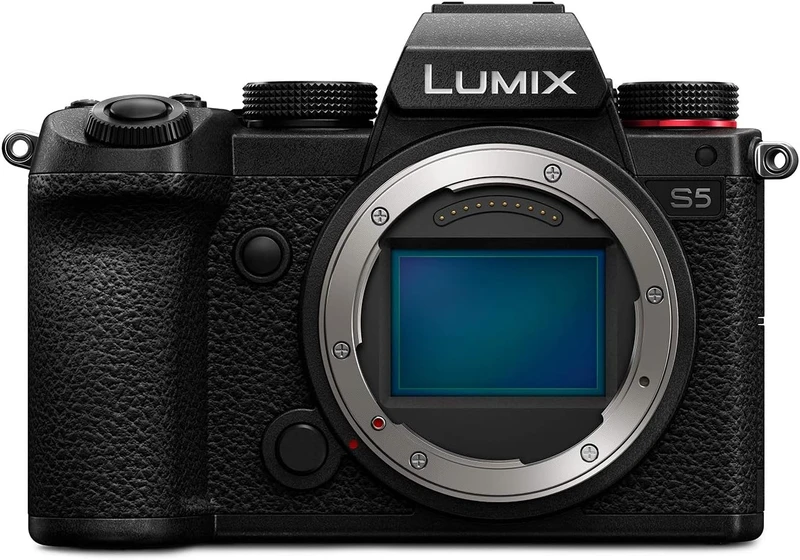
Panasonic Lumix DC-S5
Panasonic Full Frame

Panasonic Lumix DC-S5

  • Year 2020 · 24.2Mp, Full Frame

The Panasonic Lumix DC-S5 It is positioned as an essential tool that democratized high-end cinematography functions in a compact full-frame mirrorless body. Using a sensor 24.2MP CMOS with technology Dual Native ISO, Delivers exceptional performance in low-light environments while maintaining low noise and high dynamic range. By prioritizing video-centric specifications while maintaining a portable size, Panasonic positioned the S5 as a versatile tool for independent filmmakers and hybrid creators who require professional color science and robust internal recording options.Technically, the S5 relies on its Dual I.S. 2 5-axis, providing up to 6.5 stops of compensation when combined with O.I.S. lenses. compatible, a critical feature for stabilized handheld shooting. The camera uses the contrast AF system Depth From Defocus (DFD) of Panasonic, which, although very reliable for static subjects and specialized tracking, remains a point of debate for videographers accustomed to phase detection systems. Its magnesium alloy construction and extensive weather sealing ensure durability in demanding professional environments, although it relies on a single UHS-II SD slot (the second being UHS-I) and a 2.36 million-dot EVF viewfinder.In the video section, the S5 It's a powerful machine, offering 10-bit 4:2:2 internal recording in 4K/30p and up to 4K/60p with APS-C cropping. It includes V-Log and V-Gamut pre-installed, with over 14 stops of dynamic range, and supports 5.9K RAW output via HDMI to external recorders. As of March 2026, the S5 has been officially discontinued in favor of the S5 II and S5D, but it remains the "value queen" in the used market for professionals who prioritize manual control and top-notch image quality over the latest advances in phase detection autofocus.

View details

Recommended Reading