Sigma: A talk between Bobby Tonelli and Kazuto Yamaki about the future of photography
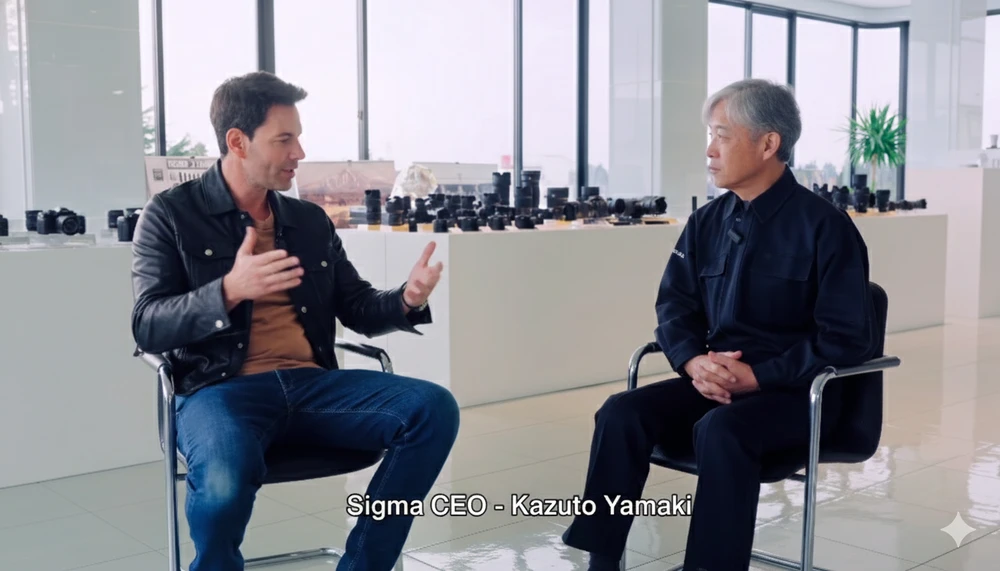
In an exclusive meeting that transports us directly to the technological heart of Japan, the renowned presenter and technology enthusiast Bobby Tonelli travels to the headquarters of Sigma to talk with the man who has revolutionized modern optics: Kazuto Yamaki, CEO of the company.
The interview is not just a technical review; It is a trip through the Aizu factory and an immersion in the mind of a leader who decided to break with the traditional schemes of the industry to prioritize innovation, emotional SEO and the human factor.
1. Leadership and Corporate Philosophy: The CEO without an office
One of the most surprising points that Tonelli highlights at the beginning of their meeting is the layout of the workspace. Yamaki doesn't lead from a secluded private office; He sits in the center of the room, surrounded by his engineers.
- Culture of closeness: This disposition allows you to be an accessible manager and listen to opinions before making critical decisions.
- Family history: His father founded the company in 1961. Yamaki grew up literally living above the factory, which gave him a natural connection with the employees since his childhood.
- The meaning of "Sigma": The name represents the sum ($\sum$) of people's wisdom and experience. Its main mission is to protect jobs and ensure the well-being of its members.
2. Lens Strategy: Art, Contemporary and Sports
Yamaki introduced a categorization that changed the rules for SIGMA SEO and brand perception, helping engineers focus on specific design goals.
The three master lines:
- Art: Designed for maximum artistic expression and optical quality without compromise.
- Contemporary: The perfect balance between high performance and compactness.
- Sports: Cutting-edge optics to capture the fastest action.
The turning point: The 35mm f/1.4 Art lens was the first product of this vision. It was a risky decision, but its resounding success defined Sigma's modern direction as an elite manufacturer.
Additionally, Sigma is integrating autofocus (autofocus) into its cinema lenses, accommodating tighter budgets and smaller film crews.
3. Innovation in Cameras: Creating what no one else dares
Since Sigma is a brand with a small market share, its strategy avoids "me too" products (copies of the competition) to focus on innovative and uniqueproducts.
The fp series (or "BF" in context):
- Design inspiration: Its simple and elegant aesthetic was inspired by a bottle of Chanel Nº 5perfume, looking for a design that will not go out of style.
- Shutterless technology: The mechanical shutter was eliminated to keep the body as small as possible, opting for the efficiency of the electronic shutter.
- User Interface (UI): Redesigned from the ground up to be intuitive, eliminating the complexity inherited from old film cameras.
The Foveon Sensor
Unlike industry standards, Sigma continues to believe in the potential of the Foveon sensor. Although it presents challenges in low light situations, it offers an organic and realistic image quality that many photographers consider unsurpassed.
4. Future Vision: Being the most "loved" brand
Closing the talk with Bobby Tonelli, Yamaki makes it clear that his ambition is not measured in sales volume. The ultimate goal is for Sigma to be the brand most loved byusers, maintaining quality and service as non-negotiable pillars.
What do you think of the evolution of Sigma?
If you are a creator looking for tools with soul and technical precision, Yamaki's philosophy is a breath of fresh air in an industry saturated with clones.
Useful Links
Some links may be affiliate links (sponsored).