Nikon D40
Useful links
Some links may be affiliate links (sponsored).
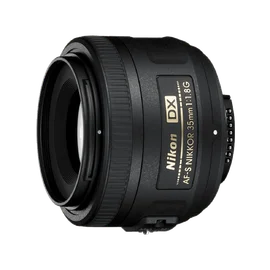
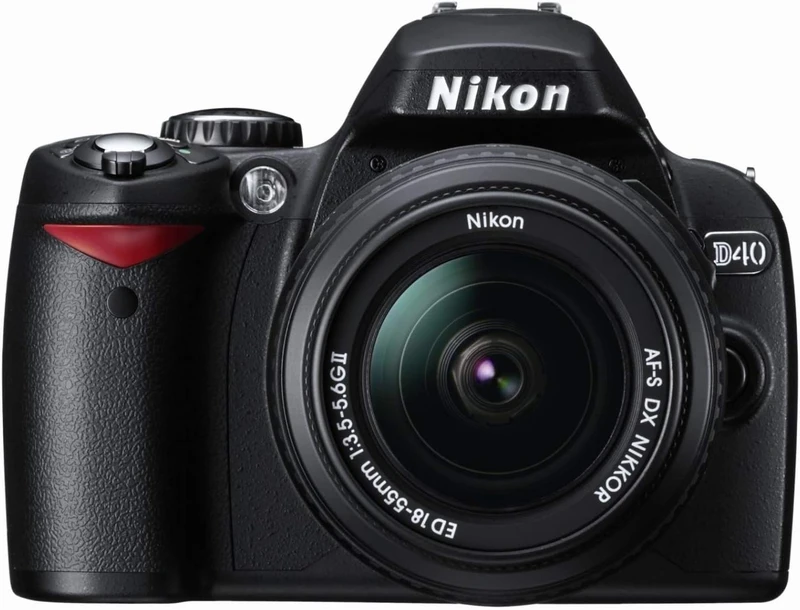
The Nikon D40 is today considered a "cult classic" in the world of digital photography, ideal for those seeking a pure, tactile introduction to imaging without the distractions of modern technology. Its most distinctive feature is its 6.1 megapixel CCD sensor; Unlike today's CMOS sensors, CCDs of this era are prized for their organic color reproduction and a look that many compare to photographic film. Despite its age, it offers exceptional ergonomics and lightness that makes it extremely comfortable for long days of shooting, maintaining the robustness that characterizes Nikon. In terms of performance, its most notable technical limitation for the enthusiast photographer is the absence of an internal focusing motor in the body, forcing the use of AF-S or AF-P series lenses if autofocus is to be maintained. However, it makes up for this with a surprising technical feature: a hybrid shutter that allows flash sync up to 1/500s. This feature is a gem for those experimenting with studio or strobist lighting, as it allows you to freeze motion and control ambient light with an efficiency that even much more expensive professional cameras envy. In terms of its practical uses, the D40 is an exceptional tool for street and travel photography due to its discreet profile and lightweight files that don't clutter storage. It is also the perfect platform for photography students who want to master the exposure triangle manually without relying on touch screens or complex menus. Combined with a prime lens like the 35mm f/1.8G, it becomes a very capable portrait camera, ideal for capturing natural skin tones and learning to "see" light without the crutch of excessive digital processing.
- Screen articulation: Fixed screen
- Release year: 2006
- Sensor type: CCD
- Video modes: No Video Mode
Specifications
- Brand
- Nikon
- Line or model
- D40
- Effective megapixels
- 6.1 Effective megapixels: usable sensor resolution for images.
- Sensor type
- CCD Sensor technology (for example, CMOS, CCD).
- Processor
- Expeed
- Low pass filter
- LPF Optical low‑pass filter that reduces moiré and aliasing.
- ISO range
- ISO 200 - 1600 (expandable to 3200) Range of ISO values available on the camera.
- Body type
- Compact SLR
- Body classification
- Dslr
- Body dimensions
- 124 x 94 x 64 mm, 522 g Physical body dimensions (width × height × depth), usually in mm.
- Viewfinder
- Optical (pentamirror), 95% coverage, 0.53x magnification Viewfinder type (optical or electronic) for composition.
- Screen size
- 2.5" Physical size of the screen; measured by the visible diagonal in inches.
- Screen Resolution
- 230k dots Number of pixels shown on the screen (width × height).
- Screen articulation
- Fixed screen Screen articulation type (tilting, fully‑articulated, etc.).
- Video modes
- No Video Mode Available combinations of resolution and frames per second (FPS) for video recording.
- Wireless connectivity
- None Wireless features available (Bluetooth/Wi‑Fi).
- Body Type (Key)
- compact-slr
- Battery Type
- EN-EL9 Battery type/model used by the camera.
- Continuous Shooting
- Up to 3.0 fps Maximum burst shooting speed in frames per second (fps).
- Storage Media
- SD / SDHC (Secure Digital High Capacity) Card/storage media formats supported by the camera.
- Launch price
- USD 599 In 2006, it is the manufacturer’s suggested price at release.
- Current price
- USD 99 It is the approximate market value (used or new) as of Mar/2026.
- Lens Mount
- Nikon F Lens mount type supported by the camera. If L-Mount Alliance appears, it means the camera uses Leica L mount shared across alliance brands.