





Photo Editor

Nikon Cameras

  • Photo Editor

Nikon has established itself in the digital era as a benchmark for innovation thanks to its Z System, its line of full-frame APS-C format mirrorless cameras. The most distinctive feature of this platform is the Z mount, which has the largest diameter on the market, allowing much more light to enter...

Brand Info

Company Name
Nikon
Official website
Full description

Nikon has established itself in the digital era as a benchmark for innovation thanks to its Z System, its line of full-frame APS-C format mirrorless cameras. The most distinctive feature of this platform is the Z mount, which has the largest diameter on the market, allowing much more light to enter the sensor. This has facilitated the creation of NIKKOR Z lenses with extremely bright apertures and sharpness that surpass previous standards, offering photographers exceptional low-light performance and artistic bokeh control.

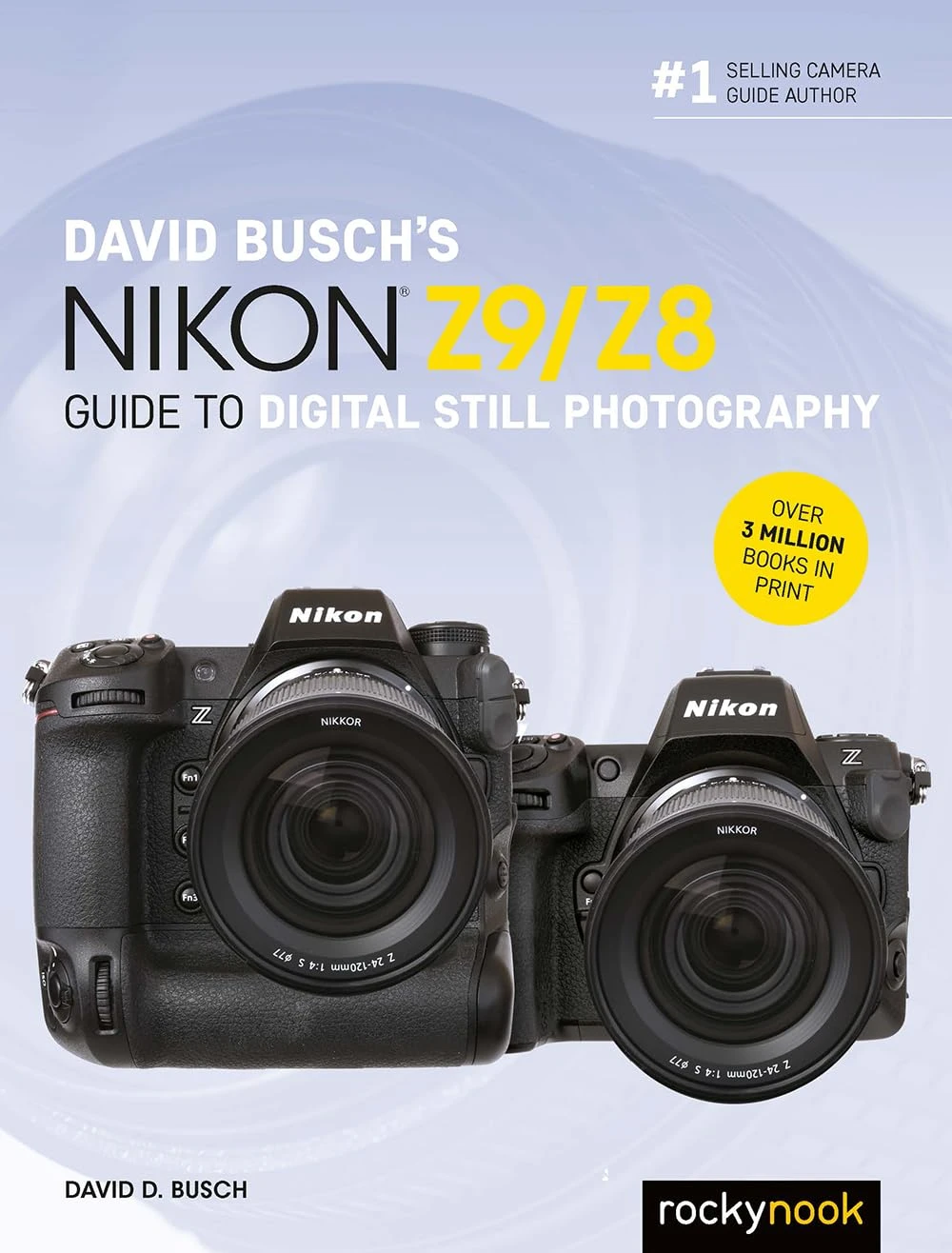
For today's photographer, Nikon offers AI-tracking autofocus (AF) technology, capable of detecting and locking on the gaze of humans, animals, birds, and even vehicles with astonishing accuracy. Iconic models such as the Nikon Z 9 or Z 8 stand out for having eliminated the mechanical shutter in favor of a fully electronic design, allowing burst shooting at ultra-high speeds and video recording in cinema-grade 8K resolution. In addition, the brand maintains its excellent ergonomics and its renowned "color science", which produces natural skin tones and RAW files with a very flexible dynamic range for professional editing.

Finally, Nikon has demonstrated a strong commitment to versatility and the photography community by integrating technologies inherited from its recent acquisition of RED Digital Cinema, dramatically improving its video capabilities. Likewise, the brand continues to support those who prefer classic style through cameras with vintage design but modern engines, such as the Nikon Z f, and maintains excellent compatibility with older lenses through adapters. In short, Nikon today offers an ecosystem that balances professional ruggedness, cutting-edge optics, and processing technology that simplifies technical challenges so the user can focus purely on creativity.

Nikon Zfc
Nikon APS-C

Nikon Zfc

  • Year 2021 · APS-C

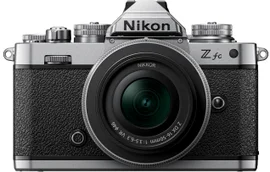
The Nikon Zfc is an APS-C mirrorless camera for the Nikon Z mount that combines a retro design inspired by Nikon's classic film SLRs with modern imaging tools. Its 20.9 MP DX CMOS sensor, EXPEED 6 processor, vari-angle touchscreen and 4K UHD recording make it a compact but capable camera within the Z system. The design is not merely cosmetic: the physical dials for shutter speed, ISO and exposure compensation make the shooting process more direct, visible and deliberate.The photographic value of the Nikon Zfc lies in the way it brings an analog-style shooting experience into a current digital camera. The APS-C sensor delivers strong image quality with compact lenses, while the Z mount gives users room to grow into both DX lenses and compatible full-frame optics. For photographers who enjoy setting exposure by hand, reading camera settings from the body and working with a camera that encourages slower visual decisions, the Zfc has a clearer personality than many simple compact mirrorless models.In practical use, the Nikon Zfc fits travel, street photography, environmental portraits, everyday documentation, social content and lightweight video work. Its articulating screen helps with self-portraits, vlogging and high- or low-angle compositions, while the small body makes it realistic to carry every day. It is especially appealing for photographers who want character, tactile controls and solid image quality without building a large kit.
View details
Nikon D5300
Nikon APS-C

Nikon D5300

  • Year 2013 · APS-C

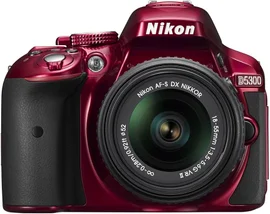
The Nikon D5300 is an APS-C DSLR with Nikon F mount built for photographers who want a traditional camera with real controls, solid image quality and enough flexibility to grow with them over time. Its 24 MP CMOS sensor, lack of an optical low-pass filter, fully articulated 3.2-inch screen, optical pentamirror viewfinder and Full HD video up to 60 fps give it a very balanced foundation for a camera in this segment. Built-in Wi‑Fi and GPS add another layer of practical usability, making it easier to share images, shoot remotely and keep location data attached to travel, family or documentary work.What makes the Nikon D5300 especially appealing is the way it combines respectable image quality with a body that stays relatively light for a DSLR. At about 480 grams, it is easier to carry for long days than many reflex cameras, and the articulated display is genuinely useful for shooting from low angles, overhead positions and on a tripod. Continuous shooting up to 5 fps, a 39-point autofocus system and an ISO range from 100 to 12800, expandable to 25600, make it capable of far more than casual snapshots. It feels at home with portraits, family photos, everyday street shooting, travel and general enthusiast photography where an optical finder and hands-on controls still matter.That gives the Nikon D5300 lasting photographic value for students, enthusiasts and anyone who wants an affordable DSLR that still teaches strong fundamentals. It works very well for portraiture, travel, landscape, social events, daily documentary use and straightforward Full HD video, especially with sharp DX primes or versatile zoom lenses. Its attraction is not based on one single headline specification, but on the mix of a detailed sensor, a practical body size, a flexible screen and useful connectivity. Even with many newer mirrorless alternatives available today, it remains a very sensible choice for photographers who want to build skills on a classic DSLR platform with dependable performance.

Nikon Z5
Nikon Full Frame

Nikon Z5

  • Year 2020 · Full Frame

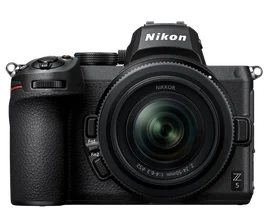
The Nikon Z5 is a full-frame mirrorless camera built around a 24.3MP CMOS sensor, the EXPEED 6, 5-axis in-body image stabilization, a 3.69M-dot EVF, a 3.2-inch tilting touch screen and 4K UHD video. It is positioned as one of the clearest entry points into Nikon's full-frame Z system, but it does not feel like a stripped-down placeholder. The combination of full-frame image quality, weather sealing, dual UHS-II SD card slots and a familiar Nikon handling philosophy makes it a camera that aims for balance and reliability rather than headline-chasing excess. Its role in the lineup is practical and deliberate: give photographers a serious interchangeable-lens body that is easier to justify, easier to carry and easier to grow with over time.Its photographic value comes from how coherent the package is in real use. The sensor gives enough resolution for everyday professional work, landscape detail, portraits and general editorial shooting without pushing files into unnecessarily heavy territory, while the 5-axis stabilization helps keep handheld photography dependable when light falls or shutter speeds drop. The electronic viewfinder, tilting touch screen and deep lens ecosystem make the camera feel flexible across stills and light hybrid work, and the dual card slots add a level of confidence that matters for travel, events and personal work you do not want to lose. The Z5 is not trying to be Nikon's fastest action body or most aggressive video body, but it succeeds by being well judged, stable and broadly useful for photographers who care more about consistency than spectacle.That makes the Nikon Z5 especially suitable for travel, portrait, street, documentary and general enthusiast full-frame photography, as well as for people moving up from APS-C or DSLR systems without wanting to jump immediately to a more expensive body. It also makes sense as a second Nikon Z body for photographers who already own lenses in the system and want a dependable companion with strong image quality and familiar controls. More than an entry full-frame camera in the simplistic sense, it is a mature and practical tool for users who want to learn the Nikon Z ecosystem properly, build a lens kit with intention and keep a body that remains relevant for a long time instead of feeling disposable after the first upgrade.

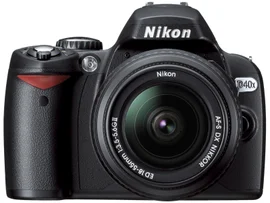
Nikon D40x
Nikon APS-C

Nikon D40x

  • Year 2007 · APS-C

Nikon D40x is a 2007 entry-level Nikon DSLR in the DX format with a 10.2MP CCD sensor and a compact interchangeable-lens body.Beyond beginner mode, it adds practical shooting support: fast startup, 3 fps burst, ISO up to 1600 (with HI-1), and a straightforward 5-line LCD workflow with direct in-camera controls for quick composition and adjustment.It is best used for everyday photography and learning paths: portraits, family scenes, travel documentation, and general-purpose landscapes where portability, simplicity and consistent still image quality matter more than modern video-first workflows.

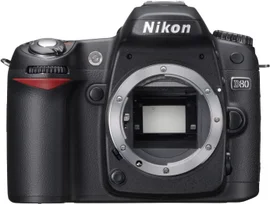
Nikon D80
Nikon APS-C

Nikon D80

  • Year 2006 · APS-C

The Nikon D80 It is a digital SLR DX format Introduced in 2006 for enthusiast photographers who wanted to make the jump to a body with serious controls without entering the professional range. It combines a 10.2 MP CCD sensor, Nikon F mount, pentaprism optical viewfinder, 3 fps burst, 2.5-inch display, and SD/SDHC storage in a relatively compact body.His photographic interest is in the classic DSLR experience: optical viewfinder, direct response, RAW/NEF files and support for a large lens base Nikon F. It is a camera designed to learn exposure, work with real depth of field and take advantage of bright lenses, telephoto lenses or external flashes without depending on modern processing.In practical use it works well for portrait, travel, family photography, day landscape, technical learning and projects with CCD aesthetics. It is not a camera for video or extreme ISO, but it is still useful for those looking for a simple, robust and economical photographic tool within the Nikon ecosystem.

Rumor Unofficial information
Nikon Z9 II (Rumor)
Nikon

Nikon Z9 II (Rumor)

  • Year 2027

The Nikon Z9 II still without official confirmation: Nikonrumors / April 25: The latest rumors suggest that the successor to the Z9 will not arrive before 2027 (perhaps its development will be announced sooner, but you won't have it in your hands in 2026)Rumors from April 23, 2026 indicates that, after a previous update on January 7, 2026, the earliest announcement window was now around Q4 2026.In the NAB 2026 Nikon confirmed improvements to firmware for Nikon ZR (Log 3G10 with H.265, H.265 codec enhancements and red focus with N-Log/RED NE); This does not amount to an official confirmation of the launch of the Z9 II.The most recent update links the rumor to supply signals: the current Z9 is reported to be in backorder in several markets, which is interpreted as a possible sign that the production line is busy for the replacement. A possible announcement or development window in 3-6 months is also mentioned.We will be updating this page with the new specifications.

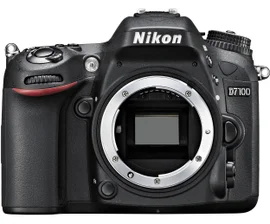
Nikon D7100
Nikon APS-C

Nikon D7100

  • Year 2013 · APS-C

The Nikon D7100 It is a reflex camera DX format presented in February 2013, which at its launch was positioned as the brand's flagship APS-C sensor model. It has a sensor CMOS of 24.1 megapixels without optical low pass filter (OLPF), designed to extract the maximum possible image sharpness and resolution, complemented by the image processor EXPEED 3.Technically, the D7100 It stands out for its advanced 51-point autofocus system with 15 cross-type sensors. Capable of burst firing at 6 frames per second and with a range Native ISO 100 to 6400 (expandable to 25,600), the camera also includes dual SD card slots and a robust chassis with a magnesium alloy body and weather sealing.It's ideal for advanced enthusiasts and nature or sports photographers who need solid tools and professional ergonomics without jumping to full format. In addition, it provides high-quality video features, allowing recording in resolution Full HD 1080p.

Nikon Z50
Nikon APS-C

Nikon Z50

  • Year 2019 · APS-C

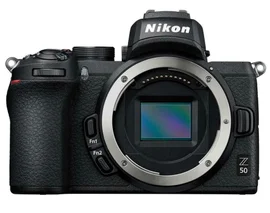
The Nikon Z50 is a mirrorless camera with APS-C sensor (DX format) that stands out by balancing an extremely compact body with the robust ergonomics characteristic of Nikon. Its 20.9 MP sensor and EXPEED 6 processor inherit much of the color science and performance of the professional range, offering exceptional image quality even in low light conditions thanks to its native ISO range of up to 51.200. It is a tool designed for those looking for portability without sacrificing the comfortable grip and the layout of physical controls that allow agile operation during a session.For the enthusiast photographer, its technical capabilities allow you to capture moments of fast action with a burst of up to 11 fps and a 209-point hybrid focusing system that includes eye detection, making portrait and street photography much easier. In the video section, the Z50 is very capable when recording in 4K without cropping, which allows you to take advantage of the entire viewing angle of the lenses, in addition to having a touch screen that folds down 180°, ideal for personal framing in video blogs or self-portraits.In terms of its uses, it is an extremely versatile option: its lightness makes it the ideal companion for travel and hiking photography, where weight is a critical factor. It also shines in creating content for social media and YouTube, functioning perfectly as a primary camera for beginning creators or as a nimble second body on larger productions. Supporting the Z lens ecosystem (and F lenses via FTZ adapter), it offers a clear growth path to explore from macro photography to long exposure landscape.

Recommended Reading