Photo Editor

Nikon Cameras with Processor Expeed 4

  • Photo Editor

Fourth-generation EXPEED with better high-ISO performance, faster processing, and support for more advanced camera features.

Brand Info

Company Name
Nikon
Official website
Not available
Full description

Fourth-generation EXPEED with better high-ISO performance, faster processing, and support for more advanced camera features.

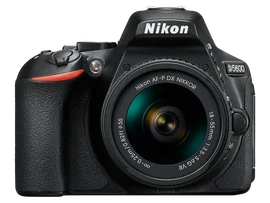
Nikon D5600
Nikon APS-C

Nikon D5600

  • Year 2016 · APS-C

The Nikon D5600 is one of the most balanced DSLR cameras for those looking to take a leap in quality without carrying heavy equipment. Its star feature is the 24.2MP APS-C sensor without a low-pass filter, which translates into images with impressive sharpness and detail for its category. Additionally, it features a fully articulated 3.2-inch touchscreen display, an essential tool for creative photographers who need to shoot from difficult angles or vlog comfortably. Another strong point of this model is its connectivity and ergonomics. Thanks to the SnapBridge system, the camera maintains a constant connection with your smartphone via Bluetooth, allowing you to automatically transfer photos while you shoot. Although it is a mid-range camera, its 39-point focusing system and excellent autonomy (capable of taking up to 820 photos per charge) make it a reliable and versatile companion, ideal for both portraits with blurred backgrounds and travel and landscape photography.

View details
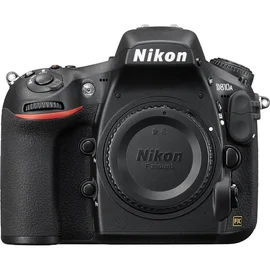
Nikon D810A
Nikon Full Frame

Nikon D810A

  • Year 2015 · Full Frame

The Nikon D810A is a specialized variant whose main feature is a modified IR cut filter, designed specifically for deep sky astrophotography. This modification makes it four times more sensitive to the H-alpha spectral line (wavelength of 656 nm), allowing it to capture emission nebulae that standard cameras usually ignore with a natural reddish intensity and color. Because of this filter, it is an optimized tool to capture the finer details of the universe that are invisible to the human eye. Beyond the sensor, the D810A introduces exclusive software features to make night work easier, such as Manual Long Exposure Mode (M)*, which allows shutter times of up to 900 seconds without the need for an external remote control. It also includes an optimized on-screen preview for focusing on stars and superior internal noise reduction for extremely long exposures. Although it maintains the 36.3 MP resolution of its standard sister, its technical configuration defines it as a niche camera, essential for those seeking maximum fidelity in astronomical photography.

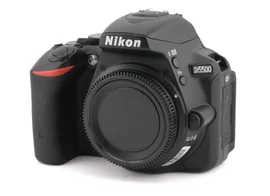
Nikon D5500
Nikon APS-C

Nikon D5500

  • Year 2015 · APS-C

The Nikon D5500 is a versatile and remarkably lightweight mid-range DSLR that stands out for its 24.2MP APS-C CMOS sensor designed without an optical low-pass filter to deliver exceptional image sharpness and high dynamic range. As the first Nikon DSLR to feature a fully articulated touchscreen LCD, it provides an intuitive, smartphone-like interface and creative flexibility for both photographers and videographers, complemented by a robust 39-point autofocus system and 1080/60p Full HD video capabilities. Despite its compact carbon-fiber composite body, it offers a deep, ergonomic grip and an impressive battery life of approximately 820 shots, making it an ideal balance of portability and professional-level performance for enthusiasts on the go.

Nikon D810
Nikon Full Frame

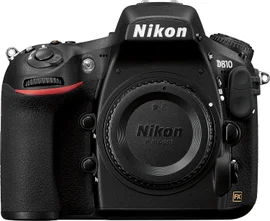
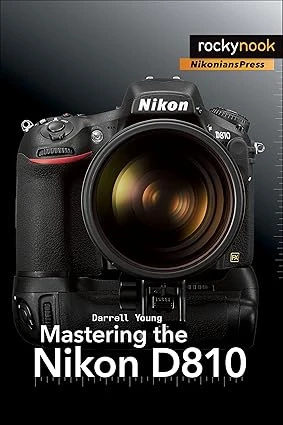
Nikon D810

  • Year 2014 · Full Frame

The Nikon D810 established itself as one of the most versatile DSLR cameras for professionals thanks to its 36.3MP full-frame sensor that dispenses with the low-pass filter (OLPF). This feature, combined with the EXPEED 4 processor, allows for extreme sharpness and exceptional dynamic range, ideal for landscape and studio photography. In addition, it stands out for offering a native ISO of 64, the lowest at the time for a DSLR, which guarantees incredibly clean images with rich tonal transitions even in bright light conditions. Its robustness and performance are complemented by a redesigned shutter mechanism that minimizes internal vibrations, along with a high-precision 51-point autofocus system. Unlike its predecessors, the D810 is significantly improved in video, enabling Full HD recording at 60p with clean HDMI output, and offering class-leading battery life (up to 1,200 shots), making it a reliable all-round work tool.

Nikon D7200
Nikon APS-C

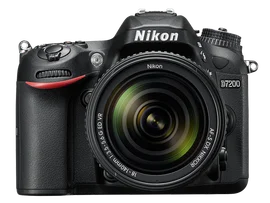
Nikon D7200

  • Year 2013 · APS-C

The Nikon D7200 is an APS-C DSLR with Nikon F mount built for enthusiast and advanced photographers who want a reflex camera that feels fast, dependable and genuinely capable for serious stills work. Its 24.2 MP CMOS sensor, lack of an optical low-pass filter, optical pentaprism viewfinder, built-in Wi‑Fi and NFC connectivity and continuous shooting up to 6 fps make it one of the more complete and well-rounded Nikon DX DSLRs of its generation. Add dual SD card slots and a more robust control layout than entry-level bodies, and the D7200 clearly positions itself as a camera for users who care about direct handling, reliability and consistent output.In real use, the Nikon D7200 stands out because it balances resolution, speed and control in a body that feels more substantial than a basic DSLR without becoming overly large or cumbersome. The 51-point autofocus system, strong battery life, ISO range from 100 to 25600 with expansion beyond that and generally responsive performance make it very convincing for portraiture, travel, street, documentary work, events and light wildlife photography. The dual-card design adds peace of mind for important shoots, while the APS-C sensor without a low-pass filter helps preserve very strong detail when paired with good lenses. Even without more modern extras such as 4K video, it remains a camera that feels highly coherent and purpose-built for photography.That gives the Nikon D7200 lasting photographic value for demanding enthusiasts, advanced students and Nikon F users who want a DSLR that can stay relevant for years. It performs especially well in portrait, landscape, travel, everyday reportage, social coverage and moderate action, particularly with fast primes or flexible telezooms in the F-mount system. Its appeal does not come from one isolated specification, but from the combination of a detailed sensor, solid autofocus, dual storage, strong general responsiveness and a classic DSLR shooting experience that still feels deeply practical. Even next to newer bodies, it remains a very sensible choice for photographers who prioritize optical-viewfinder handling, long battery life and dependable real-world performance over trend-driven feature lists.


Recommended Reading