The Graflex K-4: When a War Relic Makes Your Digital Camera Look Tiny
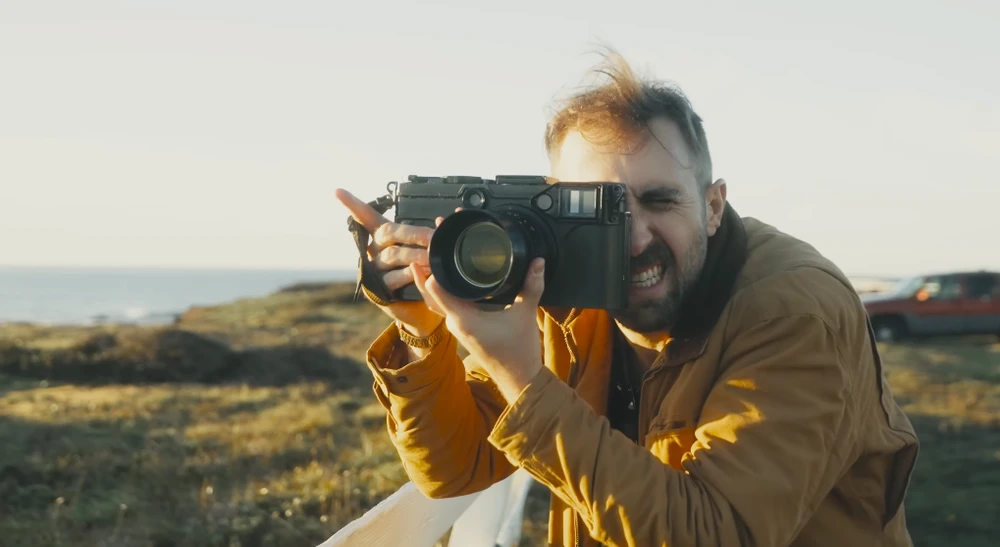
We live in an age where the most powerful camera in the world fits in your pants pocket. And then the Graflex K-4 shows up — a military camera built in the 1950s — and suddenly all that digital minimalism feels like a punchline.
A Metal Monster with a History
The Graflex K-4 is not just a camera. It is a statement of intent. Designed for the U.S. military during the Vietnam era, this 70mm rangefinder was built to survive combat. Only around 1,500 units were ever made, and most of what remains today are non-functional shells.
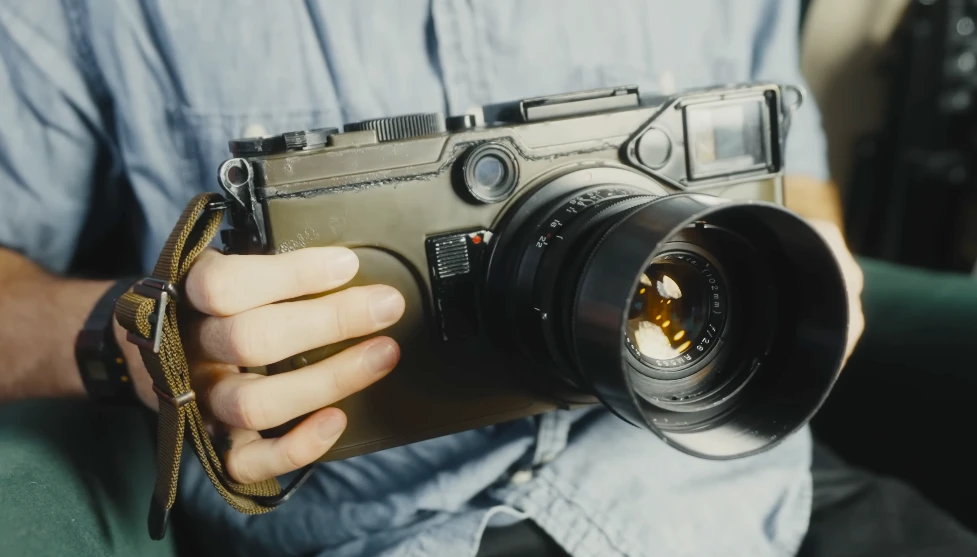
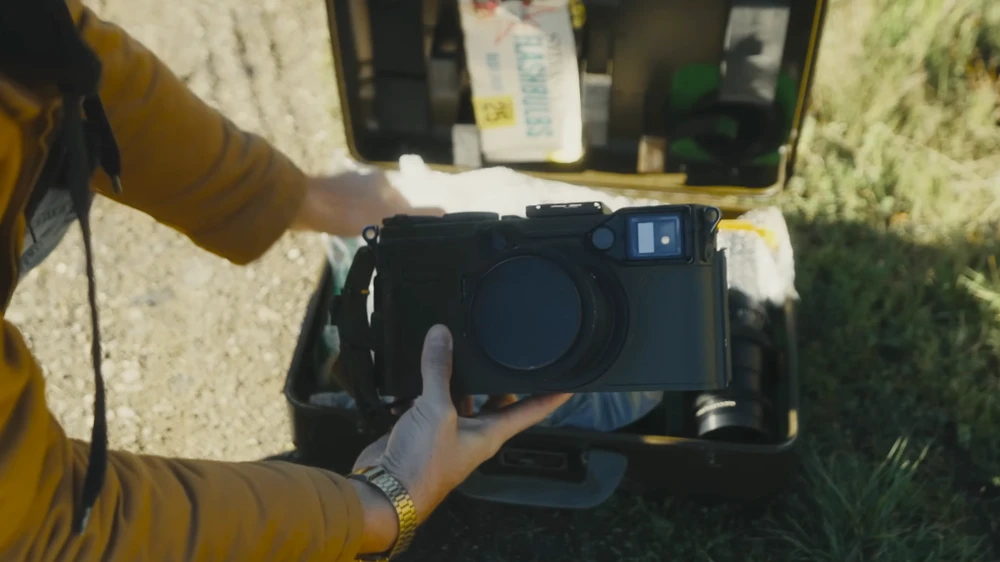
Jason Kummerfeldt, of the YouTube channel grainydays, had the chance to reunite with a working example on loan from a collector. The full kit arrived in a military Halliburton case: camera, Kodak Ektar 102.5mm lens, a massive 205mm lens, empty 70mm cassettes, and rolls of Tri-X. The only missing piece was the legendary 63.8mm wide-angle — an accessory so scarce it feels more like photography folklore than a real object.
The Format the World Forgot
The K-4 shoots on 70mm film, slightly larger than the 120mm used in traditional medium format and now virtually extinct for still photography. Loading it is anything but casual: it must be done in darkness, cutting and assembling the roll by hand. The camera even includes a built-in slicer to cut the roll mid-session — a detail that says everything about what this machine was originally designed for.
Pure Mechanics in a Digital World
No battery. No menus. No screen. It runs on a hand-wound spring motor, with no built-in light meter and a maximum shutter speed of 1/500s. A Pentax 6x7, already considered large among medium format cameras, looks restrained next to it.
The contrast with modern digital gear couldn't be sharper: a high-performance mirrorless body today weighs under a kilogram and shoots 30 frames per second. The K-4 needs its own military case, and scanning the negatives alone can take an entire evening.
Is It Worth It?
The black-and-white results have a presence that's hard to dismiss, comparable to a 6x9 system on 120 film. But the full process — hand-loading, specialized development, frame-by-frame scanning — is not for everyone.
The Graflex K-4 doesn't compete with any digital camera. What it offers is something no sensor can replicate: total process friction and the obligation to think before you shoot. If that sparks your curiosity, Jason's video covers every detail.
Useful links
Some links may be affiliate links (sponsored).