ZEISS Otus f/1.4 35mm: The Uncompromising Pursuit of Optical Perfection
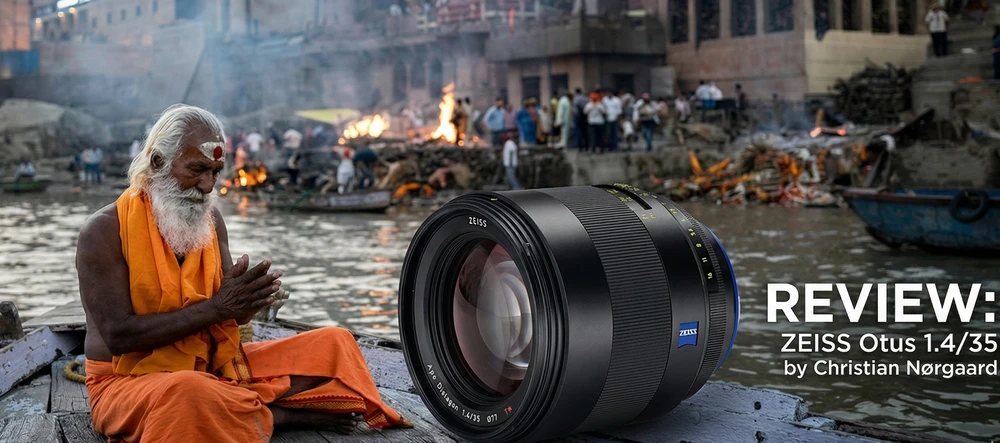
In the ecosystem of high-end optics, the name Otus (inspired by a genus of owls with exceptional night vision) is not just a label; It is a promise of perfection without compromise. After analyzing photographer Christian Nørgaard's experience with the ZEISS Otus 1.4/35, it is clear that we are not looking at a conventional lens, but rather a piece of engineering that seeks to squeeze every pixel out of the most demanding modern sensors.
The Medium Format "Look" and Optical Mastery
What really separates the Otus from any other 35mm on the market is its ability to deliver medium format performance in full format bodies. While most f/1.4 lenses suffer from chromatic aberration or loss of contrast in the corners when shooting wide open, the Otus maintains surgical edge-to-edge resolution from f/1.4. Thanks to its Distagon design of 15 elements and the use of lenses with anomalous partial dispersion, the micro-contrast is so high that it generates the famous "3D Pop" of ZEISS: that sensation that the subject physically detaches itself from the background with astonishing naturalness.
A Touch Tool for Deliberate Workflow
This lens deliberately ignores autofocus to prioritize mechanical precision. With a ring path of almost 260 degrees, the photographer has absolute control over the plane of focus, something vital in documentary, landscape or architectural photography. For the videographer, the Otus is a gem: its all-metal construction is robust and the DeClick function of the iris ring allows for smooth, silent exposure transitions, making it an ideal companion for high-end film productions.
Market Analysis and Comparison
With a price around $2,300 - $2,500 USD (which may vary depending on the frame), the Otus is positioned at the top.
When compared to benchmarks like the Sony 35mm f/1.4 GM (approx. $1,400 USD), the Sony wins in lightness and AF speed, but the Otus offers an image "signature" and pure optical correction (without relying on software profiles) that is difficult to match. Compared to the Sigma 35mm f/1.4 Art (approx. $900 USD), the Sigma is the king of utility, but the Otus delivers shadow texture and mechanical durability that make it an investment for life.
Verdict: It is the ideal lens for the creator who is no longer looking for "more megapixels", but better pixel quality. It is perfect for editorial photography, large format prints and professional video where technical fidelity is non-negotiable.
Useful Links
Some links may be affiliate links (sponsored).