Photographing without a Plan: How to Recover Curiosity and Creative Flow?
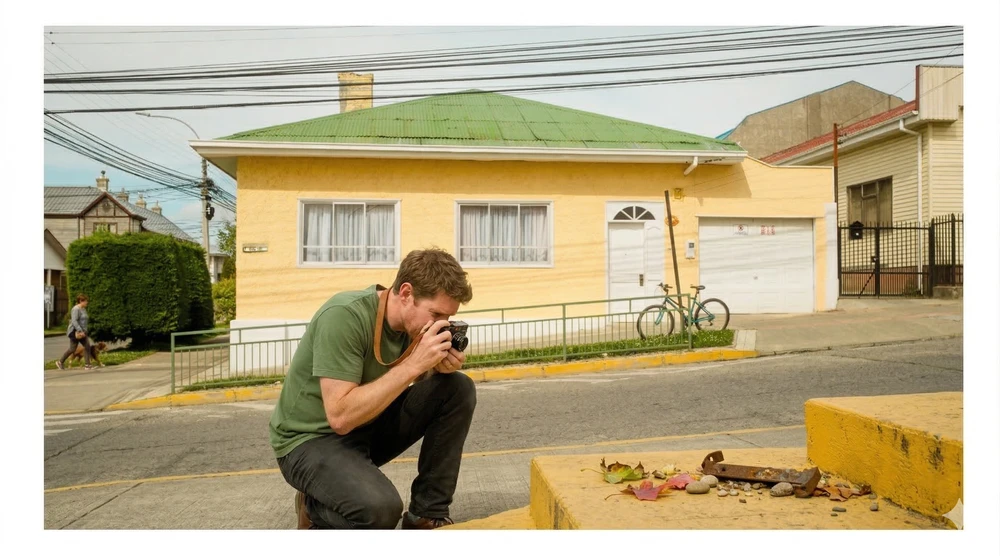
Rick Bebbington: For years, much of photography (especially travel and landscape photography) has become highly planned. Photographers research locations, study images from others, save GPS coordinates, and wait for perfect light. Yet an increasing number of photographers are adopting a nearly opposite approach (going out for a walk with a camera and no predefined plan).
At first glance this might seem improvised, but it is actually a powerful way to recover something that often disappears with experience (visual curiosity). When expectations fade, photography becomes an act of observation again. Instead of searching for a specific image, the photographer begins reacting to what is happening around them.
One of the problems with researching a location too much beforehand is that the outcome becomes predetermined. When we arrive somewhere with a photograph already formed in our minds, the camera stops being a discovery tool and becomes a reproduction tool. We end up trying to recreate the exact image we have already seen while ignoring scenes that were never part of the plan.
Walking without a checklist of photos to capture completely changes this dynamic. Instead of confirming a preconceived idea, the photographer begins exploring. In that context, any object, color, or unexpected situation can turn into an interesting photograph.
Curiosity as the photographic engine
Many of the most interesting photographs do not come from spectacular locations but from seemingly ordinary situations (an object out of place, an unexpected color combination, a vintage car in front of a bright building, or a small everyday scene). When something immediately draws attention, there is usually photographic potential there.
Even though this approach is spontaneous, certain visual principles appear repeatedly in images that work well. One of them is simplicity. When a scene contains too many competing elements, visual impact weakens. Reducing the frame to the essentials helps the main subject stand out clearly.
Another key principle is subject separation. When important elements overlap or visually blend together, the photograph can become confusing. Often a small movement or a slight change in camera position dramatically improves the composition. Space within the frame also plays a major role. Space is not simply empty (it communicates). A subject surrounded by visual breathing room can convey calm, balance, or isolation.
When walking with a camera without a strict agenda, situations begin to appear that simply cannot be planned. A pedestrian entering the frame at the right moment, an animal appearing unexpectedly, or a coincidence of colors can transform an ordinary photograph into something far more compelling. Very often, the presence of a person (even a small figure in the frame) is what ultimately gives life to the scene.
Simplifying the photographic process
Part of this approach also involves simplifying equipment. Carrying too many cameras, lenses, or accessories introduces technical decisions that interrupt observation. Working with minimal gear (a single camera and a prime lens, for example) helps photographers enter what many describe as a creative flow state.
The work also continues after returning from the walk. Image selection often follows a simple rule. Some photographs work immediately and are easy to recognize. Others clearly do not work and can be discarded. In between are uncertain images that can be revisited later. This method prevents photographers from accumulating thousands of unreviewed files and keeps archives manageable.
Post-processing is usually simple (color adjustments, exposure corrections, and small local refinements). The goal is not to radically transform the image but to reinforce what was already present in the scene.
One step many digital photographers overlook is printing their images. Seeing a photograph outside the screen changes how the work is perceived. Prints reveal details that often go unnoticed on monitors and transform the photograph into a physical object.