Astrophotography Lessons from Astronaut Donald Pettit
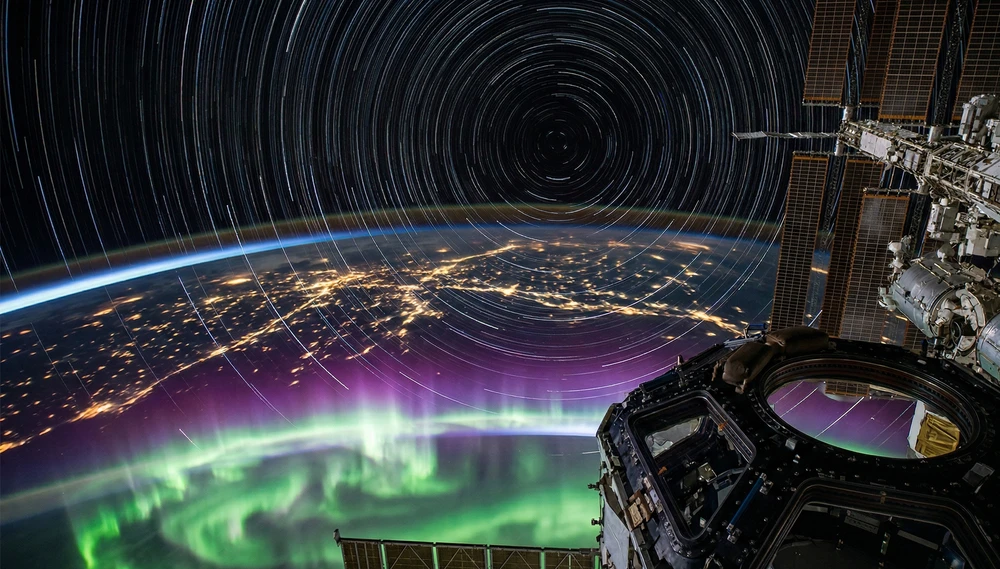
For most photographers, dealing with harsh weather conditions or low light on Earth already represents a considerable challenge. But how does a photographer adapt when his studio is the International Space Station (ISS), moving at dizzying orbital speeds, and his window is the limit between our planet and the vacuum of space? NASAastronaut, scientist and inventor Donald Pettit, who has spent more than 590 days in space, offers us a master class on how engineering, perseverance and photographic technique come together to capture the unattainable
The Challenge of Exposure and Orbital Dynamic Range
One of the first obstacles when photographing from Earth orbit is that the rules Conventional light measurement systems fall apart. The cameras' matrix metering systems are designed for terrestrial illumination; However, in space, a frame can be composed of one third of the Earth (extremely bright) and two thirds of the vacuum of space (absolute darkness)
To overcome this extreme contrast, Pettit blindly relies on shooting in 14-bit RAWformat, which allows him to rescue vital details from both the highlights and the deepest shadows, something that a simple JPEG file could not support. Additionally, bracketing (exposure bracketing) becomes a mandatory technique, setting the camera in high-speed bursts to ensure at least a perfect exposure in the face of such an unforgiving dynamic range.
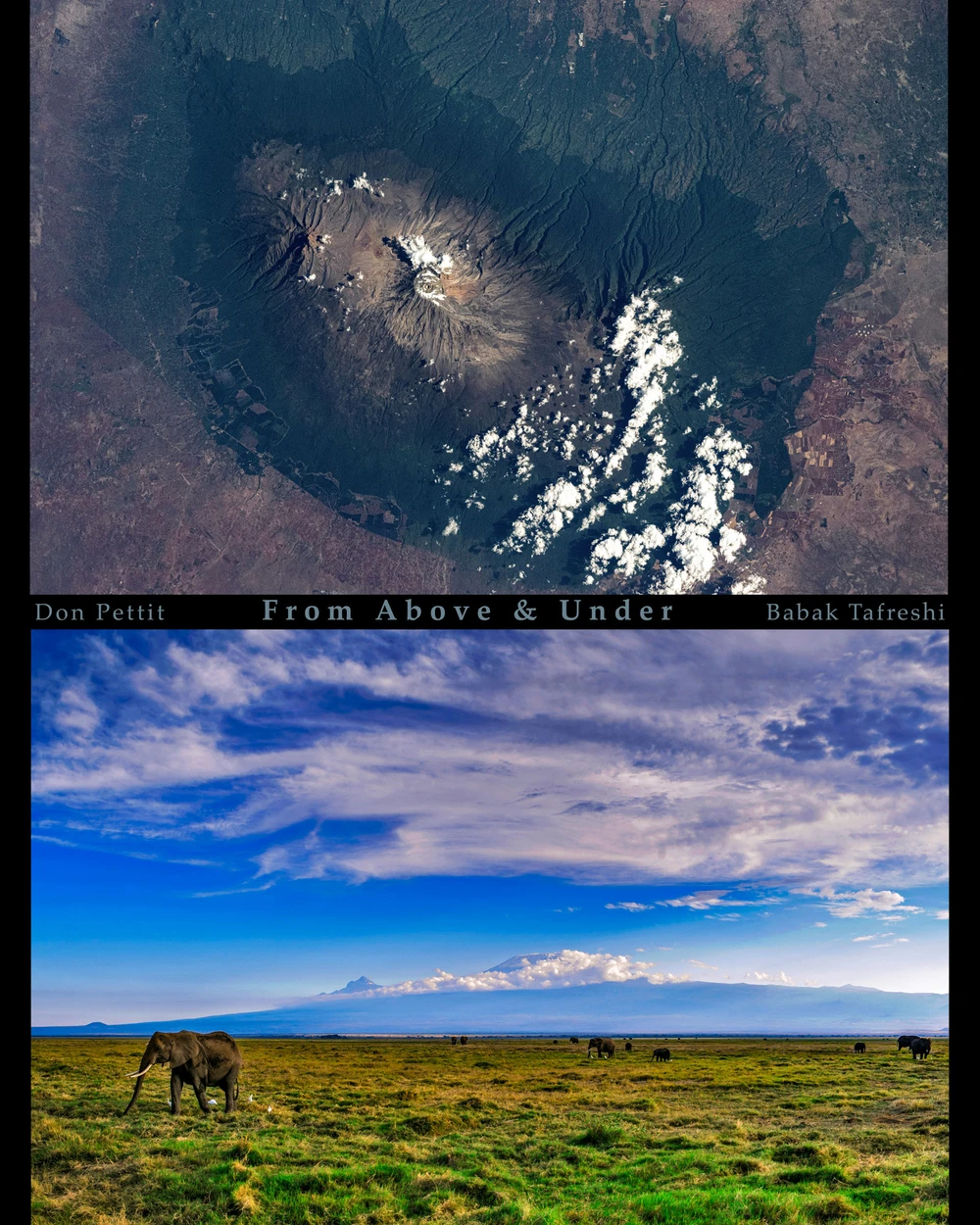
Applied Engineering: Defeating Orbital Velocity
Perhaps the most fascinating aspect of Pettit's approach is his role as an inventor. During its early missions, digital technology limited the maximum usable ISO to 800, requiring exposures of 1.5 to 2 seconds to capture city lights. At orbital speeds, this resulted in completely blurry images. Given this, Pettit made a "barn door tracker" with improvised materials to counteract the movement of the station and achieve clarity in the urban lights.
Later, he took his ingenuity to the next level by building an "orbital sidereal tracker." He modified a mechanical watch so that its hand completed one revolution every 90 minutes, coinciding exactly with the orbital period of the ISS. This invention counteracted the rotational motion and allowed him to make star field exposures 60 times longer than previously possible, keeping the stars as precise points rather than blurry trails.
Fast Optics and the Transition from Day to Night
In outer space, the world literally and figuratively passes by very quickly. Transitions from day to night last just 7 to 10 seconds, crossing multiple decades of brightness levels on the exposure value (EV) scale. To document this monumental light change, Pettit synchronized two cameras via cable: one optimized for daylight and another for night. By shooting them simultaneously, he managed to assemble millimeter-precise high dynamic range (HDR) compositions.
Today, his equipment includes modern mirrorless cameras Nikon Z9, which he transitioned to after initially resisting due to the lack of an optical viewfinder. For night photography, it requires extremely fast optics, convincing the NASA to purchase f/1.4 lenses and even T1.8 cine lenses. This allows you to maintain shutter speeds of 1/4 second at a maximum ISO of 6400, controlling noise without sacrificing image freezing.
Data Management: Workflow 400 km High
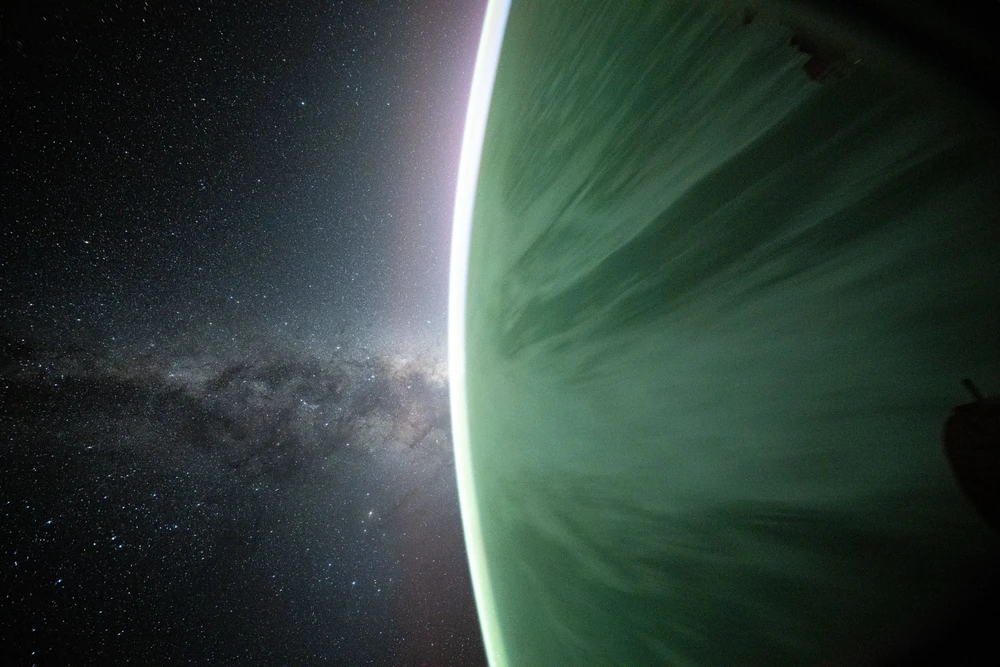
For any content creator, storage and organization are vital. On their latest seven-month mission, the crew generated a staggering 60 terabytes of raw files, translating to up to two million photographs. How does Pettit organize such an archive? Through smart cataloging in Lightroom. The secret to his workflow isn't magical software, but a little black notebook strapped to his knee. While floating in zero gravity, he constantly notes exposure times, lenses used (for example, the 85mm f/1.4 for mesospheric clouds) and dates of phenomena such as strong northern lights. Thanks to this rigorous note-taking (manual metadata), you can perform cross-variate multivariate searches in Lightroom and find needles in a 100-terabyte haystack in as little as 10 minutes.
A Planet in Transformation
Finally, Pettit's photography is an invaluable testimony of the passage of time on our planet. Over the years, he has documented how urban sodium and mercury vapor lights (yellow and greenish hues) have been replaced by white and pastel LED lighting, which, while visually striking, makes filtering light pollution for astronomical research extremely difficult. In addition, his lens has witnessed the proliferation of Starlink satellites, which he describes as brilliant "cosmic fireflies" that cross in their hundreds in front of his frames.
As photographers and videographers, there is a great lesson to take away from Donald Pettit. Whether we are on a space station, in Antarctica, or in our backyard, the advice is the same: we must explore our own borders, open our eyes, record what we see and share it. Because an image that is never shared is as if it never existed.