Kodak Verita 200D: A new film in a fully digital era?
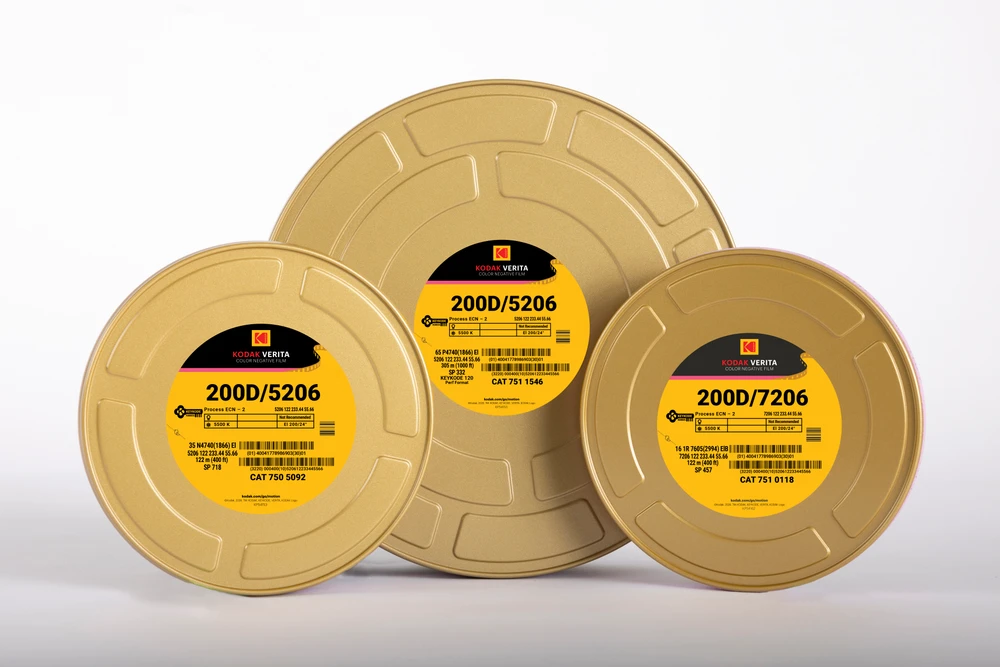
In an age where digital imaging dominates virtually every aspect of photography and video, the announcement of Kodak Verita 200D does not go unnoticed. Not so much because of its technical specifications, but because of what it represents. As the industry continues to move towards more precise sensors, more efficient workflows and increasingly controlled results, Kodak decides to release a new film. And that, today, is a statement in itself.
Verita 200D is a cinema color negative film, daylight balanced and with sensitivity ISO 200. On paper, it conforms to what one would expect from a modern stock. But it quickly becomes clear that it is not designed to compete in the same conditions as other current materials. It does not seek to be the cleanest, nor the most neutral, nor the most “correct” technically.
What is interesting is the context in which it appears: For years, the evolution of the image was pushing towards a kind of technical perfection: faithful colors, minimal noise, wide dynamic range, absolute consistency. In parallel, however, an opposite trend began to grow. More and more creators are seeking to move away from that impeccable aesthetic and recover something that digital, by itself, does not usually offer: character.
In that sense, the launch of Verita does not seem coincidental. Kodak doesn't just keep one product line alive. It responds to a demand that has reappeared, both in cinema and photography. A search for less perfect, more organic images, with a certain aesthetic imprint that does not depend solely on post-production.
There is also something symbolic in all this: In an era in which even “analog” is often simulated with presets, LUTs or color profiles, Kodak continues to bet on the physical origin of the image. Not out of nostalgia, but because there are qualities that remain difficult to fully replicate in digital.
Verita 200D, as can be seen from the announcement, aims precisely at that. It's not exactly trying to recreate an old movie, but it's getting close to that feeling. A less clinical image, with small color deviations, with a less predictable response, with an aesthetic that does not feel completely neutral.
Ultimately, Verita 200D is not just a new product. It's a sign that classic is not only still relevant, but is becoming attractive again.