





Photo Editor

Sony Cameras

  • Photo Editor

Sony develops Alpha mirrorless cameras, Cinema Line bodies, and E-mount lenses with advanced autofocus and strong hybrid photo/video performance.

Brand Info

Company Name
Sony
Official website
Not available
Full description

Sony develops Alpha mirrorless cameras, Cinema Line bodies, and E-mount lenses with advanced autofocus and strong hybrid photo/video performance.

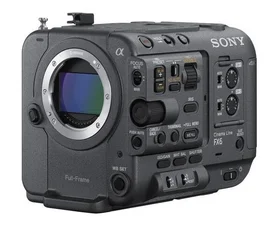
Sony FX5
Sony Full Frame

Sony FX5

  • Year 2026 · Full Frame

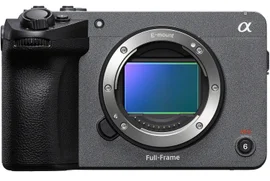
The Sony FX5 joins the Cinema Line as a full-frame camera aimed at advanced motion production in a body that is more contained than Sony's larger cinema systems. The official material currently available confirms a full-frame Exmor RS CMOS sensor with a fully stacked 5K capture design, paired with the BIONZ XR2 processor and integrated AI-assisted processing. Sony also calls out Open Gate and additional image scan modes, which places the FX5 squarely inside modern cinema workflows where framing flexibility, readout speed and dependable image character all matter in practical production. Even from the concise official overview, the camera is positioned as a serious tool rather than a simplified creator model.The visual value of the Sony FX5 is not just about a few headline specifications, but about the kind of image-making intent those features imply. A stacked 5K full-frame sensor points to a camera built for detailed acquisition, broad compositional control and the kind of responsive readout that benefits real-world shooting rather than lab-only comparisons. The presence of BIONZ XR2 with AI support reinforces that reading: this is a camera meant to help the operator maintain speed and consistency under pressure while preserving a high-end, cinema-oriented image pipeline. That makes the FX5 especially relevant for filmmakers and video teams who need strong image integrity without moving into a much larger and heavier production platform.In practical use, the Sony FX5 looks particularly well suited to documentary work, premium interviews, branded campaigns, music content, commercial production and compact multicamera setups that still demand a recognizably cinematic look. It should also appeal to crews that need to move quickly between stripped-down body-only operation and a more production-ready configuration with the XLR handle version, depending on how audio capture and rigging requirements evolve from set to set. As Sony gradually exposes more granular specification detail, the conservative reading is already clear: the FX5 is designed around capture flexibility, modern processing and a professional visual language for creators who want a compact cinema body with room to scale.
View details
Sony RX10 V
Sony 1 inch

Sony RX10 V

  • Year 2026 · 1 inch

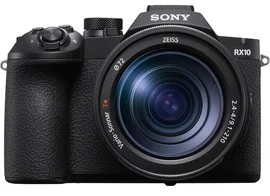
The Sony RX10 V looks set to emerge as a fixed-lens bridge camera built around a 1-inch sensor, continuing the RX10 idea as an all-in-one superzoom tool. Early information points toward a camera meant to keep a very broad focal range inside a single body, giving photographers a simple way to cover wide views and distant subjects without building a larger interchangeable-lens kit. That concept has always been part of the RX10 appeal, and it still matters for users who prefer to leave the house with one practical camera instead of several moving parts. At this stage the picture is still preliminary, so some aspects may shift, but the overall direction suggests a camera focused on reach, convenience, and fast field readiness rather than system complexity.From a photographic perspective, the likely value of the Sony RX10 V lies in how it could balance range, portability, and immediacy. A camera in this class can be especially appealing to users who need to move quickly from wider framing to distant subjects without stopping to swap lenses, reorganize gear, or carry a heavier bag. If the current direction holds, the RX10 V would continue a very practical philosophy: keep the shooting process simple, keep the response time short, and let the photographer concentrate on timing instead of equipment changes. For many people, that kind of directness matters more than the maximum flexibility of a larger interchangeable-lens system, especially when speed and convenience decide whether a shot is made at all.In real use, a superzoom bridge camera like the RX10 V could make a lot of sense for travel, observation, casual wildlife, outdoor events, long walks, and lightweight hybrid creation where one camera has to solve many different situations. It could also appeal to advanced enthusiasts who want broad coverage and reduced friction instead of a more demanding multi-lens setup. Even before every final detail is known, the concept already suggests a tool built around versatility, fast reactions, and the freedom to work light without giving up telephoto reach. If Sony follows that path through to launch, the RX10 V could again become a very attractive option for photographers who want maximum convenience from a single integrated camera.

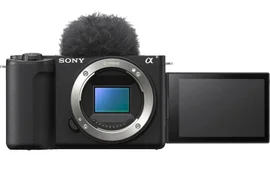
Sony ZV-E10 II
Sony APS-C

Sony ZV-E10 II

  • Year 2024 · APS-C

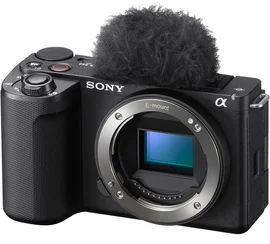
Sony ZV-E10 II is an APS-C mirrorless camera aimed directly at content creators who need a light, portable body that goes beyond what a compact camera or a phone can offer. The evidence gathered through accepted advisor sources confirms an APS-C Exmor R CMOS sensor with approximately 26MP for stills, the Sony E-mount, and a design language clearly focused on hybrid creation. It also supports 4K up to 60p, Full HD up to 120p, a fully articulated screen, and a body weight around 377g, all wrapped into a package Sony positions for creators. The overall result is a modern, compact camera built around mobility, speed and practical digital production.From a photographic and video perspective, the ZV-E10 II offers an appealing balance between image quality, portability and creative flexibility. The APS-C format gives it a stronger base for subject separation, lens variety and more ambitious everyday work than simpler creator cameras, while the move to 4K 60p and Full HD 120p makes it better suited to dynamic clips, reels, lightweight interviews and clean slow motion. Its mirrorless interchangeable-lens design also means the camera can evolve with the user: a small wide-angle lens makes it more natural for vlogging and travel, a fast prime improves portrait and low-light work, and a standard zoom turns it into a practical all-round production tool. It is not just a video-forward body, but a compact hybrid platform with room to grow.In real-world use, the Sony ZV-E10 II makes sense for vloggers, YouTube creators, streamers, small commercial shooters, travelers, online educators and users who want to enter the Sony E system with a recent creator-focused camera. The fully articulated screen helps with self-framing, the light body is useful for handheld work and movement, and E-mount compatibility gives the system a clear upgrade path. It can also work well for light social photography, casual portraiture, product content, behind-the-scenes coverage and fast editorial jobs where speed matters almost as much as final quality. For users who want a current, portable and creator-oriented hybrid camera, it is a very coherent option.

Sony ZV-E10
Sony APS-C

Sony ZV-E10

  • Year 2021 · APS-C

Sony ZV-E10 is an APS-C interchangeable-lens camera built for creators who want a meaningful step up from a phone or a basic compact without moving to a large and heavy body. Its 24.2MP Exmor CMOS sensor and BIONZ X processor deliver solid detail, pleasing color and useful noise control, while the Sony E-mount gives access to a very broad lens ecosystem. It also adds 4K up to 30p, Full HD up to 120p, a side-opening vari-angle screen, touch controls and a light 343g body that is easy to carry for travel, casual shooting and day-to-day content production. The overall package makes its priorities clear: simplicity, mobility and creator-friendly handling rather than a complicated operating style.In photographic terms, the ZV-E10 is valuable because it offers more creative flexibility than its compact size suggests. The autofocus system with 425 phase-detection points and 425 contrast-detection points helps keep focus dependable for portraits, handheld product clips, everyday scenes and moderate subject movement, while the ISO 100-32000 range with expansion to 51200 gives it room for interiors, night streets and mixed light. It is not the obvious choice for demanding sports or long action bursts, but it performs well as a hybrid camera when the user moves between stills and video in the same assignment. The interchangeable-lens design changes the personality of the camera completely: with a fast prime it becomes stronger for low light and portrait work, with a small wide-angle it feels natural for vlogging and travel, and with a standard zoom it settles into a very practical general-purpose role.In real use, the Sony ZV-E10 fits vloggers, YouTube channels, streamers, product creators, travelers and users buying a first modern mirrorless body without jumping straight to a more expensive or more intimidating system. The side-opening screen makes self-framing easier, Full HD at 120p gives clean slow motion, and the E-mount platform leaves plenty of room to grow without changing systems. It can also serve well for light social photography, casual portraits, behind-the-scenes coverage, online teaching and small commercial projects where agility matters more than maximum ruggedness. For users who value portability, flexibility and a clear upgrade path, it remains a very capable and current creative tool.

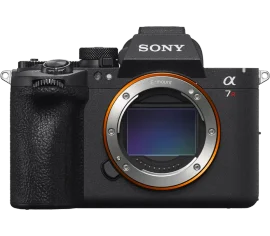
Sony Alpha 7R VI
Sony Full Frame

Sony Alpha 7R VI

  • Year 2026 · Full Frame

Sony Alpha 7R VI (7RM6B) is a full-frame camera for the Sony E ecosystem, built around a 66.8 MP stacked sensor and BIONZ XR2 processing. It is designed for creators who need a high pixel camera without giving up practical handling: long capture sessions remain usable, tonal transitions stay predictable, and subject focus is easier to stabilize across mixed lighting. In that sense, it is not only about peak resolution, but about making that resolution sustainable in real production, from prelight setup to final delivery.For photographers, the most relevant characteristics are blackout-free 30 fps operation, hybrid autofocus with dense coverage, and a 9.44M-dot EVF, all aimed at improving subject confidence. These traits help in motion-heavy situations where the window to make a clean decision is short, and they also matter in controlled studio or landscape scenarios where precision margins are narrow and consistency is critical. In practice, this model supports cleaner frame selection, steadier tracking, and reduced hesitation when switching between close and distant subjects.In real use, it performs strongly in high-resolution landscape, portrait, product, architecture, and wildlife/action photography where fine detail and flexible crop behavior matter. It is also oriented to hybrid photo-video workflows, since its stills/video positioning allows teams to keep a coherent visual reference across formats, reduce repetitive testing, and shorten post-production feedback loops. For practical work, this usually translates into more usable shots per day and better continuity between shooting and color grading stages.

Sony ILME-FX6
Sony Full Frame

Sony ILME-FX6

  • Year 2020 · Full Frame

The Sony Cinema Line FX6 (ILME-FX6) is positioned as a revolutionary tool that combines the versatility of Alpha cameras with the cinematic performance of the series VENICE. Equipped with a sensor Full-Frame of 10.2MP backlit and optimized for 4K video capture, this camera is capable of offering a dynamic range of more than 15 stops and amazing sensitivity thanks to the BIONZ XR processor. Its primary value proposition lies in its ability to deliver professional cinema results in an extremely compact and lightweight body, ideal for single-operator productions.Technically, the FX6 It stands out for its fast hybrid focusing system with real-time Eye AF, which guarantees critical sharpness even when working with minimal depths of field. It incorporates a revolutionary electronic variable ND filter that allows full control over exposure without affecting depth of field or color balance. His Construction is modular and robust, with active thermal management that allows long recording sessions without overheating, maintaining superior ergonomics for demanding shoots.In the video section, the camera supports internal recordings in 4K up to 120p in 10-bit 4:2:2, using cinematic color profiles such as S-Cinetone for natural reproduction of skin tones without the need for intensive post-processing. In addition, it has an exit 16-bit RAW a via SDI for highest quality workflows. It is the ultimate tool for documentary filmmakers, premium content creators and independent filmmakers seeking exceptional image quality and absolute technical reliability in any filming environment.

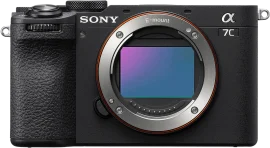
Sony Alpha A7C II
Sony Full Frame

Sony Alpha A7C II

  • Year 2023 · Full Frame

The Sony Alpha A7C II arrives as a powerful successor that bridges the gap between ultra-compact portability and professional-tier imaging performance. Utilizing the high-performance 33MP Exmor R BSI-CMOS sensor and the dual BIONZ XR processors from the A7 IV, it offers a significant resolution boost over its predecessor. This second iteration refines the "compact full-frame" concept by incorporating modern processing power and superior ergonomics, including a much-requested front control dial, making it a more versatile tool for advanced enthusiasts and professionals alike. A key technical leap in the A7C II is the integration of a dedicated AI processing unit, which elevates its 759-point phase-detection AF system to flagship levels of subject recognition and tracking precision. The in-body image stabilization (IBIS) has also been upgraded to offer up to 7.0 stops of compensation, a major improvement for handheld photography and stabilized video work. While maintaining the portable rangefinder-style body, Sony has also improved the electronic viewfinder to a 0.70x magnification, addressing one of the primary criticisms of the original model. Videographers will find the A7C II to be a vastly more capable hybrid, now supporting internal 4K recording up to 60p with a 10-bit 4:2:2 sampling. The inclusion of S-Cinetone, S-Log3, and the ability to load custom User LUTs allows for professional-grade color workflows straight from the camera. Despite its small size, it maintains a robust build with weather sealing and comprehensive connectivity, though it remains a single UHS-II card slot device. It represents the current pinnacle of performance-to-size ratio in the full-frame mirrorless market.

Sony Alpha A7C
Sony Full Frame

Sony Alpha A7C

  • Year 2020 · Full Frame

The Sony Alpha A7C marked a pivotal shift in full-frame design, managing to package a 24.2MP BSI-CMOS sensor and 5-axis in-body image stabilization into a body remarkably similar in size to the APS-C A6600. By eliminating the traditional pentaprism-style hump in favor of a rangefinder-style layout, Sony successfully created one of the world's smallest and lightest stabilized full-frame cameras. It targets travel photographers and hybrid creators who prioritize portability without compromising the shallow depth-of-field and dynamic range benefits of a larger sensor. Technically, the A7C leverages the mature 693-point phase-detection AF system found in the A7 III, providing reliable Real-time Tracking and Eye AF for humans and animals. Its impressive battery life of 740 shots (CIPA) using the NP-FZ100 battery is a significant feat for its size, ensuring long shooting sessions. The fully articulated screen further enhances its hybrid appeal, allowing for flexible framing in both high and low angles, as well as vlogging. However, the 0.59x magnification of its 2.36M-dot EVF and the lack of a front command dial are notable ergonomic trade-offs for its compact footprint. On the video front, the A7C offers oversampled 4K recording up to 30p with no crop, utilizing the full width of the sensor for maximum quality. While internally limited to 8-bit 4:2:0 sampling, it still provides S-Log2, S-Log3, and HLG profiles for post-production flexibility. The inclusion of dedicated headphone and microphone ports, combined with its compact form, makes it an excellent choice for gimbal work and high-quality content creation. It stands as a balanced entry point for those stepping into the full-frame ecosystem through a travel-centric lens.

Recommended Reading