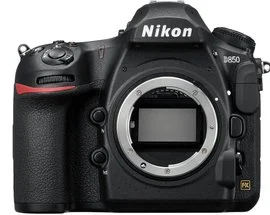
Nikon D900: Why the Successor to the D850 Never Existed
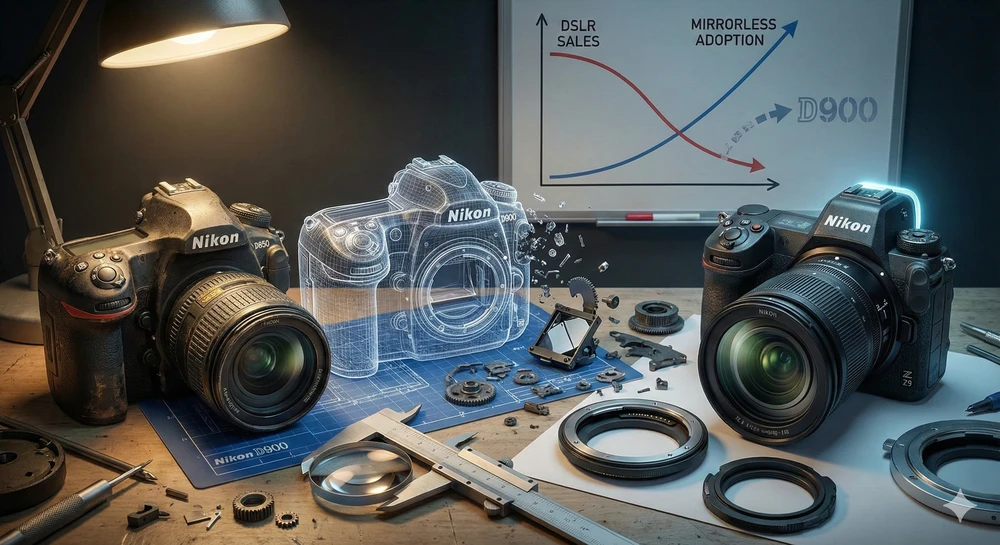
The Nikon D850 is widely regarded as one of the most respected DSLR cameras ever made. Years after its release, it continues to hold strong demand in both professional and second-hand markets. As a result, one question still comes up frequently among photographers: why did Nikon never release the Nikon D900?
The absence of the D900 was not accidental. It reflects a broader strategic shift within Nikon and across the camera industry as a whole.
The Decline of the DSLR Market
- When the D850 was introduced, professional DSLR development was still commercially viable. Over time, however, DSLR sales declined steadily, while nearly all remaining market growth moved toward mirrorless cameras.
- Developing a new flagship DSLR would have required significant investment for a shrinking audience with limited long-term potential. From a strategic standpoint, the Nikon D900 became increasingly difficult to justify.
Mount F and Its Technical Limits
- Nikon’s F-mount is one of the company’s greatest historical strengths, offering decades of compatibility between cameras and lenses. However, its inner diameter and flange distance began to impose real limitations as sensors increased in resolution and optical designs became more demanding.
- Pushing beyond the D850 would have required major optical compromises. By contrast, the Z-mount was designed to provide greater flexibility and long-term technical headroom.
The Mirror as an Evolutionary Ceiling
- DSLR systems rely on a complex mechanical mirror mechanism. In cameras like the D850, this system was already optimized close to its practical limits in terms of speed, vibration control, and durability.
- Mirrorless cameras eliminated this constraint entirely, enabling faster burst rates, improved subject tracking, and more consistent performance by relying directly on the image sensor.
Changing Expectations for Professional Cameras
- Modern professional cameras are expected to perform well in both photography and video. In DSLRs, video recording requires the mirror to remain raised, disabling the primary autofocus system and relying on slower alternatives.
- Mirrorless cameras unify photo and video autofocus through on-sensor phase detection, aligning more closely with current professional workflows.
The Real Successor to the D850
From a technical perspective, the Nikon D900 did have a successor, just not within the DSLR system. Cameras such as the Nikon Z8 and Nikon Z9 now occupy the role a D900 would have filled, delivering professional performance without the mechanical and optical limitations of DSLRs.
Conclusion
- The Nikon D900 never existed because it was no longer necessary. Its absence was not a mistake, but the logical outcome of a system that had reached its evolutionary limits.
The D850’s legacy remains intact, but Nikon’s future was built on a different foundation.