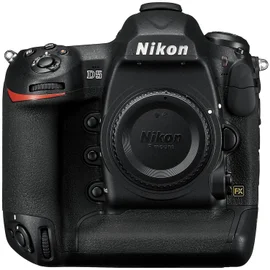
Why did the NASA choose a Nikon D5, from 10 years ago, to go to the Moon in 2026?
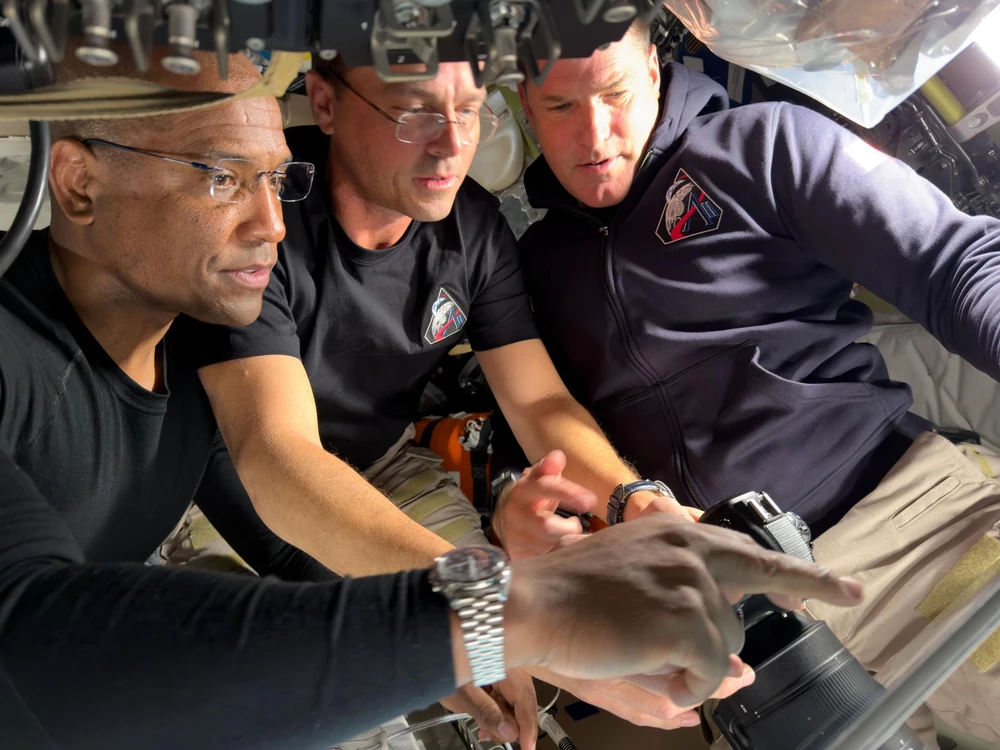
When the NASA confirmed that the main camera of the Artemis II mission would be a Nikon D5 —released in 2016, when iPods still existed—, the reaction in the photography community was one of genuine perplexity. How is it possible that the most advanced space agency in the world sends its astronauts to the Moon with an almost ten-year-old DSLR, ignoring the mirrorless cameras that today surpass it in almost every measurable technical specification? The answer, as almost always in photography, has less to do with megapixels and more to do with understanding exactly what each tool is for.
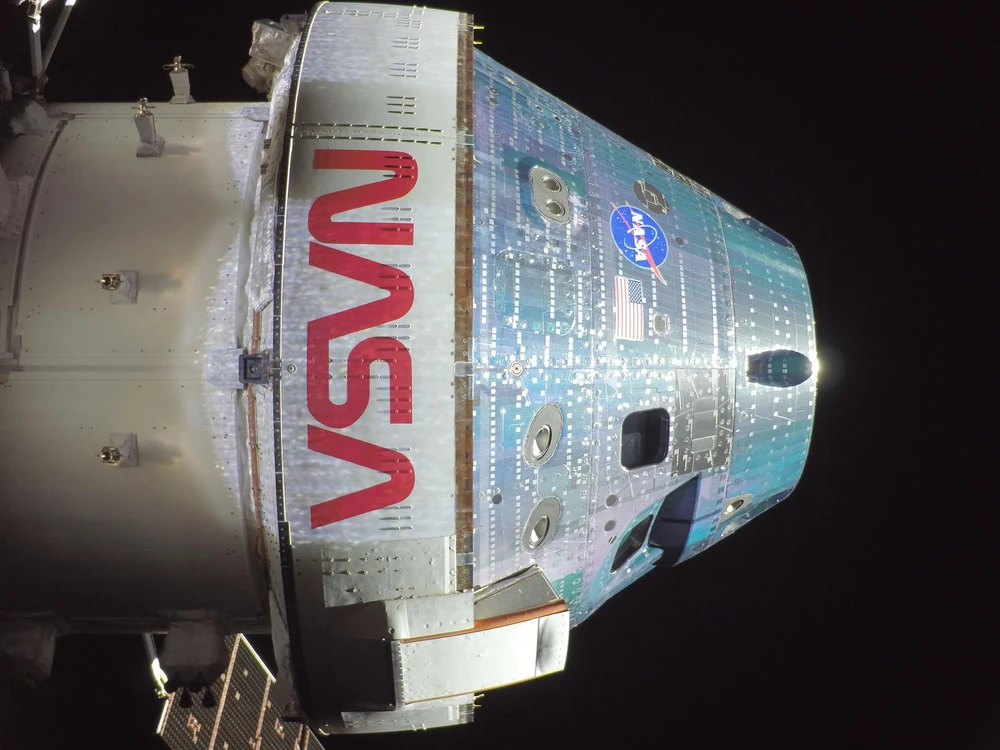
On April 1, 2026, for the first time since Apollo 17 in 1972, four people left Earth's orbit for the Moon. The Artemis II mission —with NASA astronauts Reid Wiseman, Victor Glover, Christina Koch and Canadian Jeremy Hansen— was not a moon landing, but a 10-day flyby that included crossing the far side of the Moon, something that no human being had witnessed with their own eyes. The mission also set a new distance record: 406,771 kilometers from Earth, surpassing Apollo 13. And, from a visual point of view, it is possibly the most documented manned space expedition in history: 32 cameras on board, including two Nikon D5, one Nikon Z9, several GoPro and astronauts' personal smartphones: the first time personal phones have been authorized on a space flight.
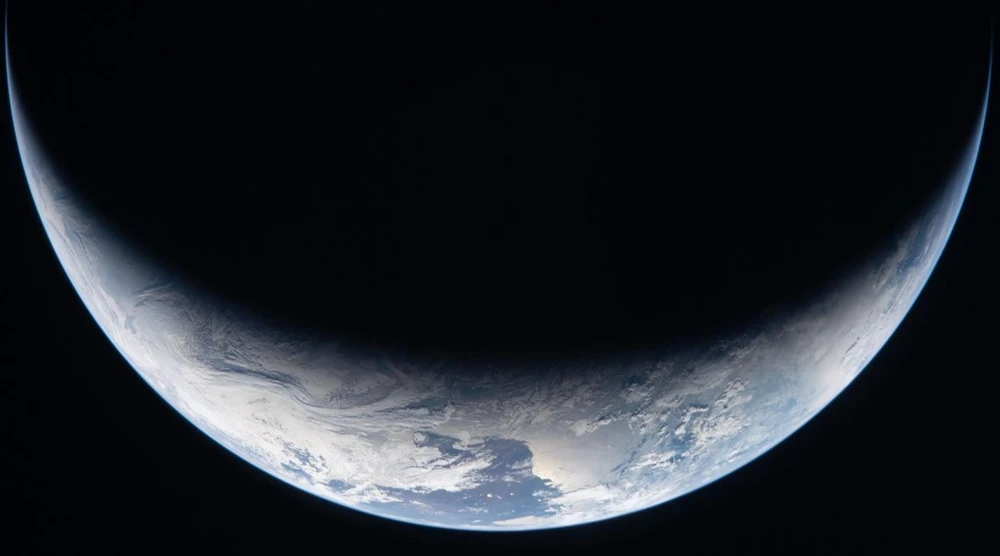
The key to understanding the choice of D5 lies in a single variable: the maximum ISO. This camera works natively up to ISO 3,280,000. The Nikon Z9, the manufacturer's flagship mirrorless model in 2026, reaches ISO 102,400. It is not a minor difference: we are talking about a sensitivity to light about 30 times greater. On the dark side of the Moon, where there is no direct sunlight and exposure conditions are extreme, that margin is the difference between a photograph and a black screen. To illustrate with a specific case: Commander Wiseman photographed the Earth from the Orion window at ISO 51,200, with an exposure time of 1/4 of a second at f/4. The result was one of the most widely circulated images of the mission, taken with a camera that many photographers had already considered obsolete.
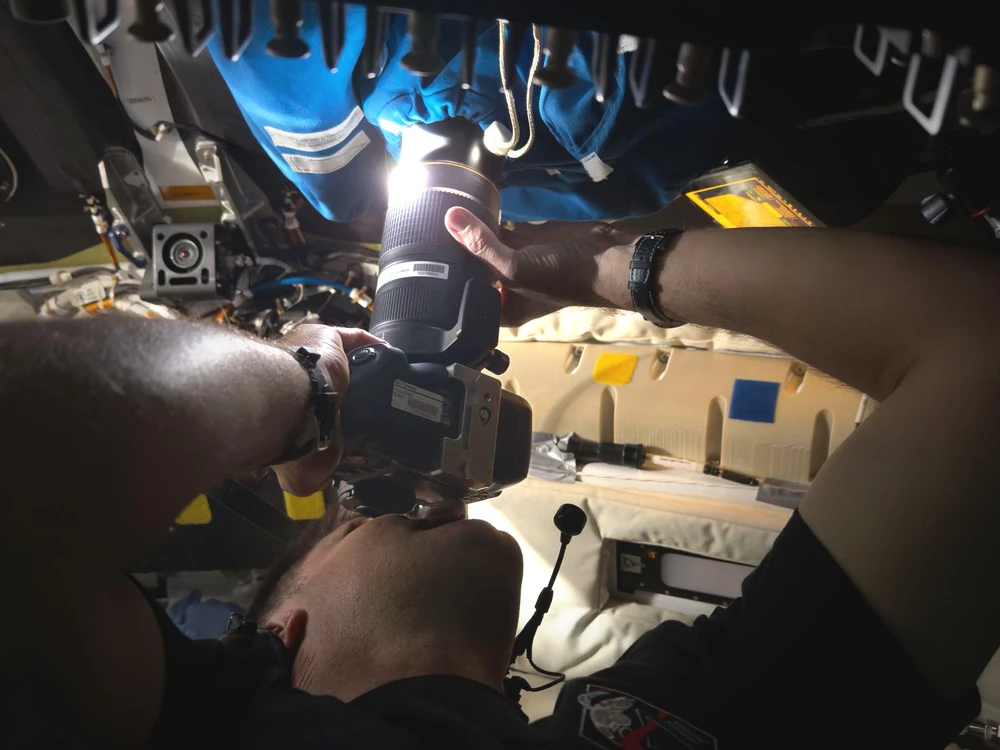
But low-light performance was not the only reason: there is a technical argument that was widely discussed in specialized forums and that rarely appears in the mass coverage of the mission: the optical viewfinder. Mirrorless cameras display the scene through an electronic viewfinder, which is essentially a high-resolution screen that interprets what the sensor captures. An optical viewfinder, on the other hand, does not interpret anything: it shows reality as it enters the lens, without digital mediation. During the lunar flyby, the astronauts didn't just take photographs; They were doing active science. They took turns at Orion's windows using the 80-400mm zoom as an observation telescope, describing in real time and out loud what they saw —craters, impact basins, lunar terrain textures— to a science team on the ground at the Johnson Space Center. In that context, seeing through an optical viewfinder is seeing the Moon. To see through an electronic viewfinder is to see a representation of it. For direct scientific observation, this distinction is not minor.
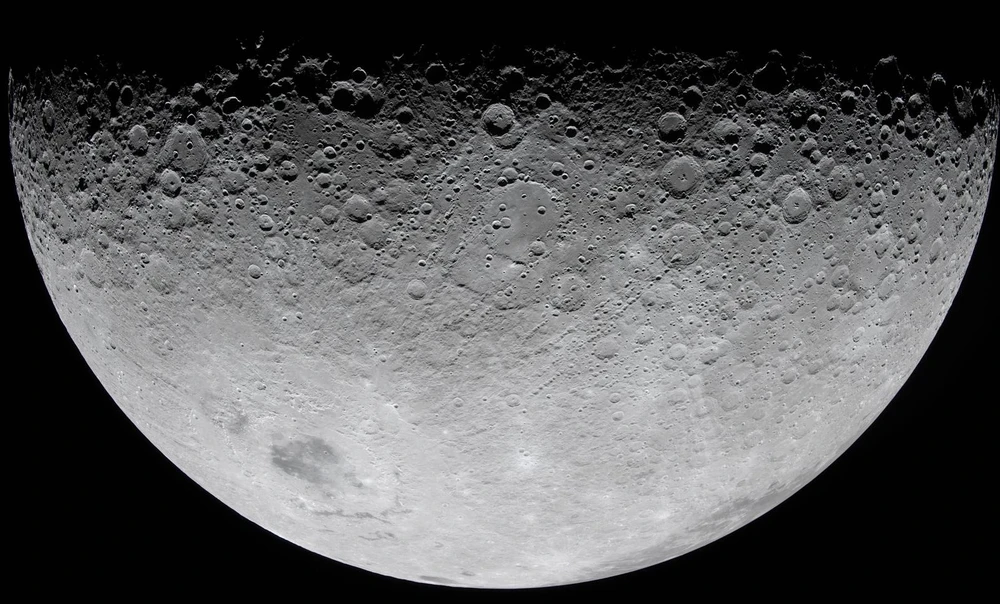
The lens kit followed the same pragmatic logic: the lens most used during the flyby was the Nikon AF-S 80-400 mm f/4.5-5.6G, chosen to capture details of the lunar surface about 6,500 kilometers away. With that lens, astronauts photographed craters such as Vavilov, the Hertzsprung Basin and the immense Orientale, a structure almost 1,000 kilometers in diameter that no human had ever seen in its entirety before. For wide views of Earth and space, they used the Nikon AF-S 14-24mm f/2.8G. And for intermediate light situations inside the capsule, the AF Nikkor 35 mm f/2D: a design with more than 30 years of history that, according to the data from the mission itself, worked without any problem hundreds of thousands of kilometers from home.
The Nikon Z9, for its part, was not a decorative passenger. The crew included it almost at the last moment — Commander Wiseman says they “fought hard” to get it — for a specific purpose: to study how modern sensors respond to deep space radiation. The data collected will be used to design the HULC (Handheld Universal Lunar Camera), a camera built on the Z9 platform, designed specifically for missions to the lunar surface. Artemis II was, in that sense, the testing ground for the photographic future of the NASA.
And the D5 did its job one last time: Artemis III will almost certainly no longer carry it.
The photographs that arrived on Earth in the days after the flyby stand out not only for their historical value. Earth —setting above the lunar horizon, captured at 6:41 p.m. (Eastern Time) on April 6— is an image that dialogues directly with the departure of Apollo 8 from Earth in 1968, 58 years apart. The total solar eclipse seen from lunar orbit, with the Sun's corona visible around the dark disk of the Moon, is a type of image that is unprecedented in the history of space photography. And close-ups of Vavilov Crater and Orientale Basin, taken at 400mm from a moving capsule, show geological details of 3.8 billion-year-old structures with a clarity that scientists are already studying.
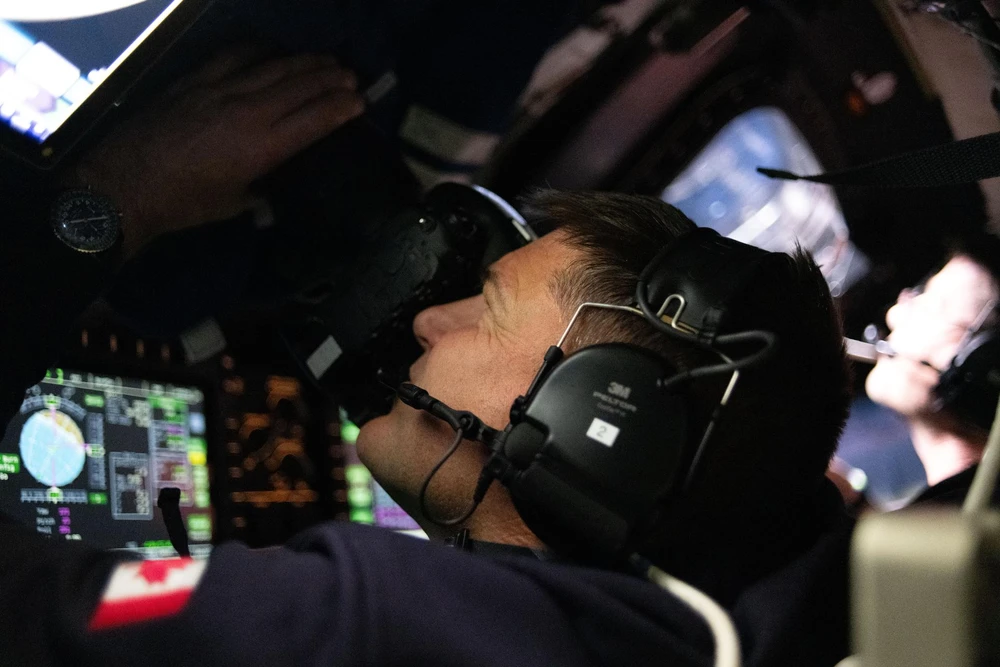
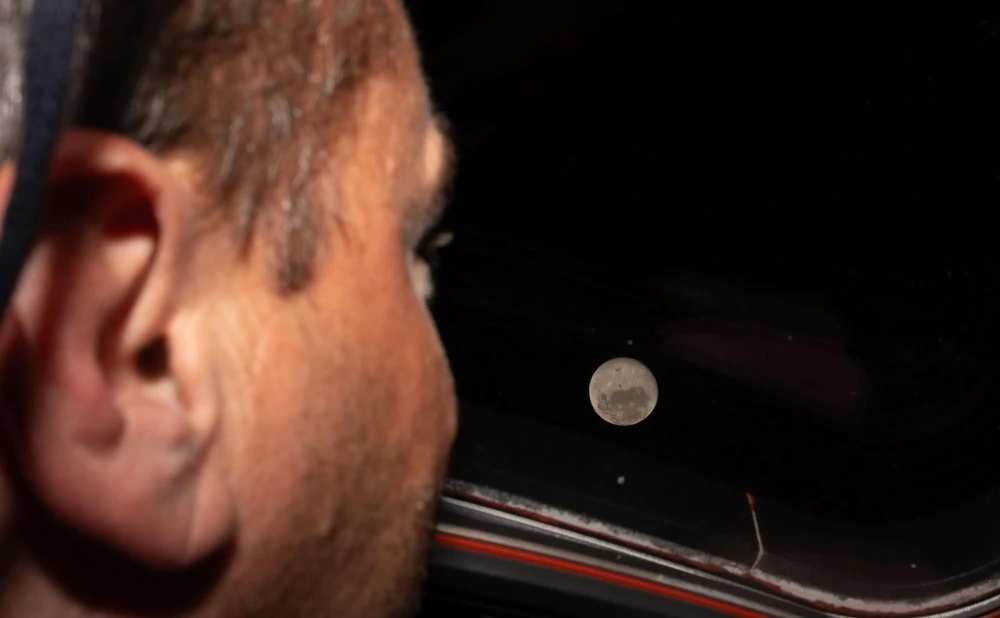
All these images are available for free in the official NASA galleries: nasa.gov/gallery/lunar-flyby and nasa.gov/gallery/journey-to-the-moon.
All this leaves a reflection that goes far beyond space: the photographic decision of the NASA with Artemis II is a reminder of something that the most experienced photographers know, but that the industry constantly tries to make us forget. The most advanced equipment is not always the most suitable. The Nikon D5 did not travel to the Moon despite its age. It traveled because, for that specific environment —extreme darkness, space radiation, need for direct optical observation without the possibility of error—, it was still, in 2026, the most capable tool. The Z9 is objectively a superior camera in most contexts. But “most contexts” was not the context. The context was the dark side of the Moon, and for that the answer was a ten-year-old DSLR.
It's tempting to obsess over the latest version, the newest sensor, the fastest autofocus system. But what defines a good photography decision —whether in deep space or at a wedding in a poorly lit room— is not the year the equipment was manufactured. It is the precision with which that equipment responds to the specific conditions of the work in front of you.
Useful Links
Some links may be affiliate links (sponsored).