DJI Osmo Pocket 3 vs C400 3-in-1: Which Action Camera is for ii?
Introduction
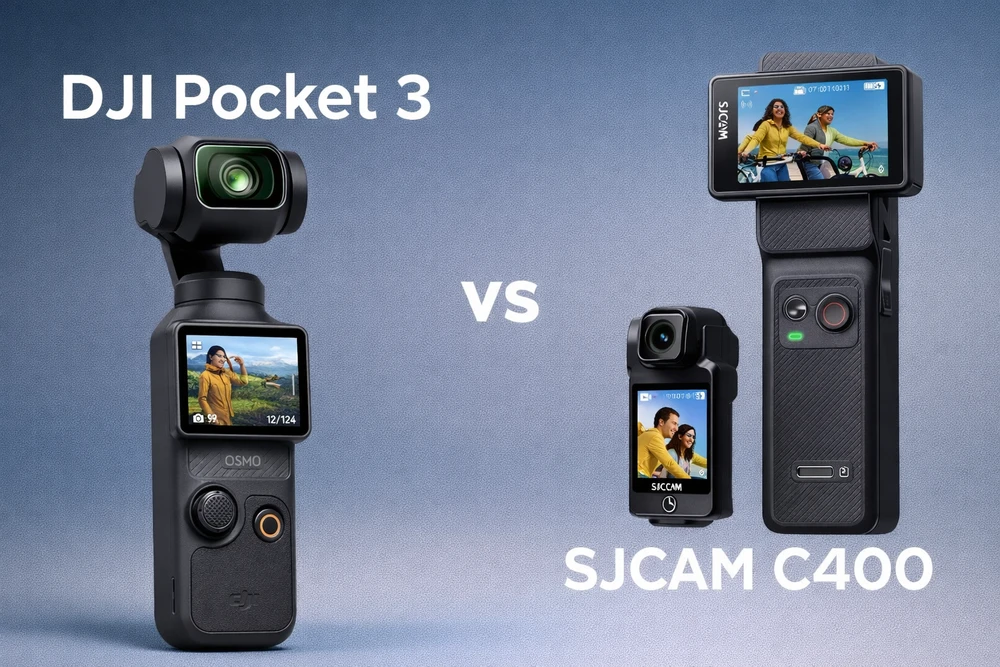
If you're a content creator, vlogger, or simply looking for a portable camera to capture your adventures, you've probably come across two interesting options: the DJI Osmo Pocket 3 and the C400 3-in-1 by SJCAM. Both promise excellent video quality in a compact format, but they take very different approaches. Here are the most important pros and cons of each to help you decide.
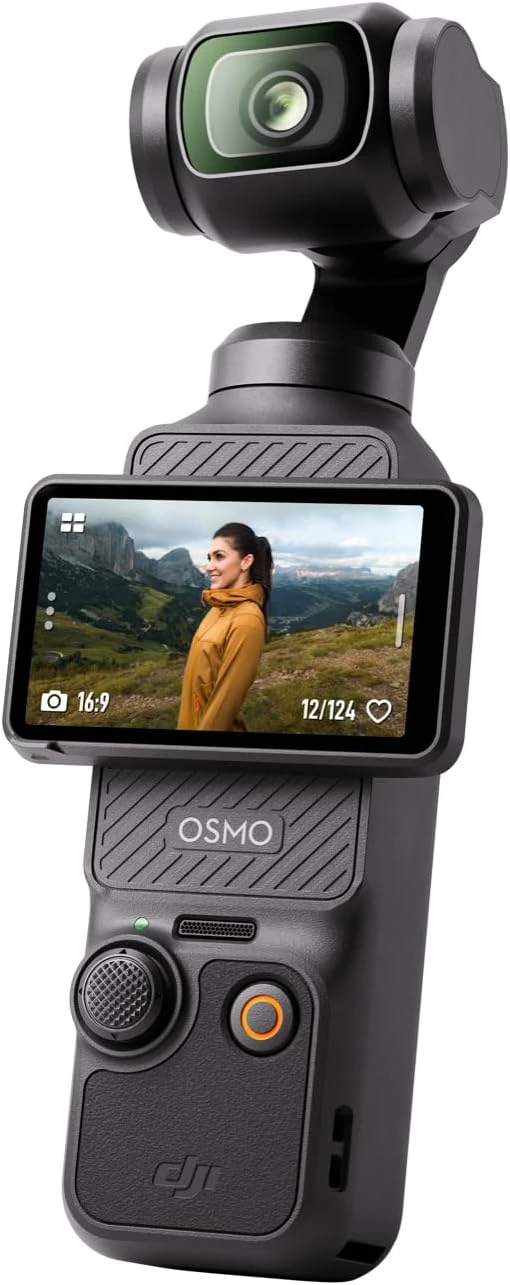
DJI Osmo Pocket 3
Pros
- Superior Image Quality The Pocket 3 features a 1-inch CMOS sensor, significantly larger than the C400's. This translates to better dynamic range, superior colors, and excellent low-light performance.
- 3-Axis Mechanical Gimbal Stabilization This is the star of the show. DJI's physical gimbal offers cinematic stabilization that no electronic stabilization can match. Your videos will look incredibly smooth even while walking or running.
- ActiveTrack 6.0 Automatic subject tracking is exceptionally accurate. You can set up the camera on a tripod, step into frame, and it will follow you automatically—ideal for solo creators.
- 2-Inch Rotating Touchscreen The high-quality OLED touchscreen easily rotates to switch between horizontal and vertical modes. Plus, simply rotating it powers on the camera.
- Video up to 4K/120fps Professional video capabilities with 10-bit D-Log M and HLG recording for maximum flexibility in post-production.
- Seamless Integration with DJI Mic 2 Effortless connectivity with the DJI Mic 2 wireless microphone system, offering professional-quality audio (24-bit 48kHz).
Cons
- High Price At USD $499 for the standard version (USD $799 for the Creator Combo), it's significantly more expensive than the competition.
- No Water Resistance The Pocket 3 has no water or dust sealing, limiting its use in adverse conditions.
- Fragility The mechanical gimbal, while excellent, is delicate. You don't want to drop this camera.
- Limited Battery Life Approximately 90-100 minutes of continuous 4K/30fps recording. You'll need extra batteries for long sessions.
- Learning Curve While intuitive, the menus can be somewhat confusing at first and require time to familiarize yourself.
C400 3-in-1 Handheld Action Camera
Pros
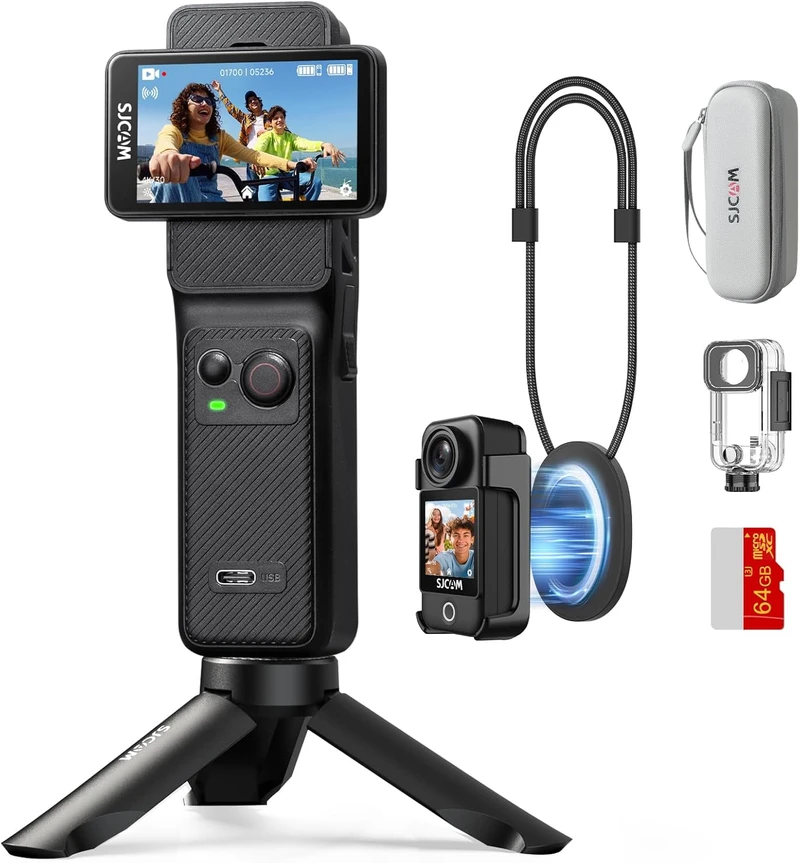
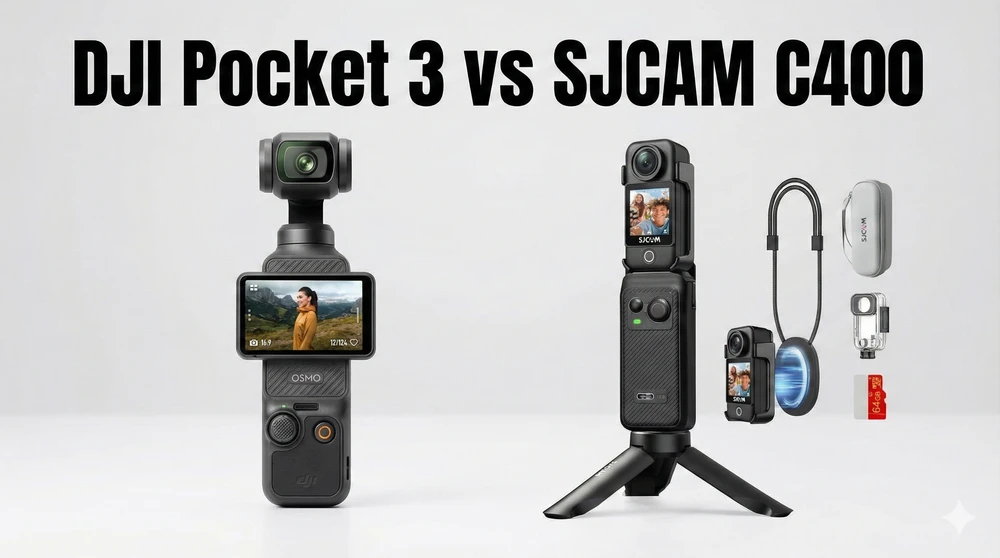
- Unique Modular Design The camera can be separated from the handle/controller. This gives you three options: use the complete system, use only the mini camera for POV, or use the wireless controller remotely.
- Affordable Price At USD $249 for the complete system (or USD $159 for just the mini camera), it's less than half the price of the Pocket 3.
- Exceptional Battery Life With the handle connected, you get up to 7 hours of continuous 4K recording. The mini camera alone offers nearly 3 hours.
- Smart Wireless Controller You can mount the camera somewhere and control it from up to 8-10 meters away with real-time preview. This completely eliminates the problem of "blind" recording.
- Included Accessories Comes with multiple mounts, waterproof case (30m depth), adapters, and more. Everything you need to get started.
- Extreme Versatility From mounting on bikes, helmets, and pets, to using it with a magnetic collar. The creative possibilities are endless.
- Portability The mini camera weighs only 54g and measures 68×32×25.5mm. It literally fits in any pocket.
- Cons
- No Mechanical Gimbal Uses electronic stabilization (6-axis gyroscope with SteadyMotion V1.0). While it works well, it doesn't reach the smoothness level of DJI's gimbal.
- Smaller Sensor 1/2.8-inch CMOS sensor with f/2.0 aperture. Image quality is good for the price, but doesn't compete with the Pocket 3, especially in low light.
- No External Microphone Input You're limited to the internal microphone, which has limited range. Not ideal if you need professional audio.
- Only 4K/30fps No 4K/60fps or 120fps option like the Pocket 3. Slow-motion capabilities are more limited.
- Longer Startup Time Since it needs to boot both the handle and camera and establish the connection between them, startup time is noticeably slower than the Pocket 3.
Which Should You Choose?
Choose the DJI Osmo Pocket 3 if:
- You need the best possible image quality in a compact format
- Cinematic stabilization is fundamental to your work
- You frequently work in low-light conditions
- Professional audio is important (with the DJI Mic 2)
- You don't mind investing more for better performance
- You primarily do vlogs, product reviews, or YouTube-style content
Choose the C400 3-in-1 if:
- You want maximum versatility and creative options
- Budget is an important consideration
- You need long battery life
- You want to use the camera in multiple configurations (POV, remote control, handheld)
- You plan to use it for action sports or extreme adventures
- You like experimenting with unique angles and creative mounts
- You want a camera you can "rough up" without much worry
Conclusion
Both cameras are excellent at what they do, but they serve slightly different purposes. The DJI Osmo Pocket 3 is the compact professional tool that offers cinematic quality and ease of use, ideal for serious creators who prioritize quality. The C400 3-in-1 is the Swiss Army knife of action cameras: more versatile, more affordable, and more rugged, perfect for adventurers and creators who value flexibility over technical perfection.
Your choice will depend on what you value most: premium image quality or versatility and value? Both are solid purchases in their respective niches.
Where to buy
Some links may be affiliate links (sponsored).